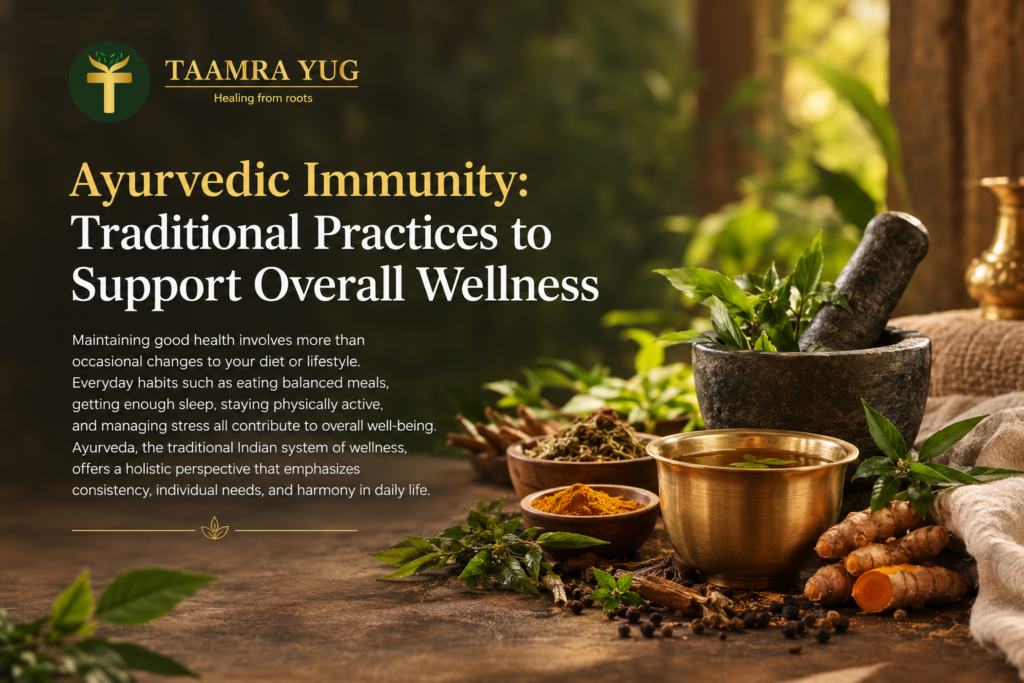
Maintaining good health involves more than occasional changes to your diet or lifestyle. Everyday habits such as eating balanced meals, getting enough sleep, staying physically active, and managing stress all contribute to overall well-being. Ayurveda, the traditional Indian system of wellness, offers a holistic perspective that emphasizes consistency, individual needs, and harmony in daily life.
Ayurvedic immunity is a topic rooted in traditional Ayurvedic concepts of health, nourishment, and resilience. Rather than focusing on a single ingredient or remedy, this approach considers everyday routines, digestion, rest, and general well-being.
In this article, we explore traditional Ayurvedic perspectives on immunity, practical lifestyle habits, commonly discussed herbs, and important considerations for using complementary wellness practices safely.
What Does Immunity Mean in Ayurveda?
In modern medicine, the immune system is a complex network of cells, tissues, and organs that helps the body respond to infections and other threats.
Ayurveda approaches health through its own traditional framework. One relevant concept is Ojas, which is traditionally associated with vitality, strength, and resilience. Ayurvedic teachings also emphasize the role of nourishment, digestion, rest, and balanced daily habits in maintaining well-being.
These principles connect with the broader Ayurvedic approach to daily living. Our guide to Ayurvedic Lifestyle: Daily Habits for Balanced Living explores how regular routines, mindful eating, movement, and rest can form part of a consistent wellness routine.
Although Ojas has a place in Ayurvedic philosophy, it is not a direct equivalent of measurable immune function. No single Ayurvedic practice can guarantee protection from infections.
1. Follow a Balanced and Nourishing Diet
Food is central to traditional Ayurvedic wellness. Ayurvedic dietary guidance often considers individual preferences, digestion, seasonal conditions, and personal circumstances.
For everyday health, aim for a varied diet that includes:
- Vegetables and fruits of different types.
- Whole grains and other suitable sources of carbohydrates.
- Protein-rich foods such as pulses, beans, dairy, eggs, fish, or other options according to your diet.
- Sources of healthy fats, including nuts, seeds, and suitable oils.
- Adequate fluids throughout the day.
Traditional Indian meals can fit well into a balanced eating pattern. Dal, vegetables, whole grains, and other familiar foods can provide a range of nutrients when combined appropriately.
Ayurveda also emphasizes mindful eating. Eating at regular times, chewing comfortably, and paying attention to hunger and fullness can help establish a consistent routine.
For a broader understanding of how traditional wellness practices can fit into everyday life, read our article on Ayurvedic Lifestyle Practices.
No particular food can guarantee stronger immunity, and restrictive diets are not necessary for most people. If you have a medical condition or specific nutritional needs, seek guidance from a qualified healthcare professional or registered dietitian.
2. Maintain a Consistent Daily Routine
Ayurveda describes Dinacharya as a traditional daily routine intended to bring consistency to everyday activities.
You can apply this idea through simple habits:
- Wake up and go to bed at reasonably consistent times.
- Eat meals at regular intervals that suit your needs.
- Make time for personal care and relaxation.
- Include physical activity in your schedule.
- Take breaks during long periods of work.
A consistent routine can make it easier to maintain healthy habits over time. It does not need to follow a rigid timetable or traditional schedule to be useful.
You can also explore our article on How to Choose the Right Ayurvedic Therapy for Your Wellness Goals to understand how individual needs and wellness goals can guide decisions about traditional Ayurvedic care.
3. Prioritize Sleep and Recovery
Sleep is essential for general health and plays an important role in normal immune function. Inadequate or disrupted sleep can affect how the body functions, making consistent rest an important part of a healthy lifestyle.
Consider these practical steps:
- Maintain a regular sleep schedule.
- Keep your bedroom comfortable, quiet, and dark.
- Reduce stimulating screen use before bedtime.
- Avoid caffeine late in the day if it interferes with sleep.
- Allow enough time for rest according to your age and individual needs.
Traditional Ayurvedic routines may include calming evening activities, such as gentle stretching or quiet reflection. These can be incorporated into a bedtime routine if they help you relax.
Some people also explore traditional relaxation-focused treatments. For example, Shirodhara Therapy is an Ayurvedic procedure involving a steady stream of liquid, often oil, directed over the forehead by a trained practitioner.
Shirodhara should not be presented as a guaranteed treatment for sleep disorders or as a method of boosting immunity. If sleep problems persist, speak with a healthcare professional.
4. Include Regular Physical Activity
Movement supports general health and can help make daily routines more balanced. Ayurveda traditionally emphasizes choosing activities according to individual capacity and circumstances.
Suitable activities may include:
- Walking.
- Yoga.
- Gentle stretching.
- Cycling.
- Strength-building exercises suited to your fitness level.
Begin gradually if you are new to exercise, and increase activity according to your abilities. Consistency is more useful than pushing yourself into an unsustainable routine.
Physical activity supports overall health, but it should not be presented as a guarantee against illness or infection.
5. Manage Stress Through Everyday Habits
Long periods of stress can affect sleep, mood, and everyday functioning. Ayurveda traditionally emphasizes the relationship between lifestyle, mental well-being, and physical health.
Simple habits can help create more opportunities for rest:
- Take short breaks during demanding tasks.
- Practice gentle breathing or mindfulness.
- Spend time outdoors when possible.
- Maintain social connections.
- Make time for enjoyable activities.
If you are interested in traditional practices associated with relaxation, read our guide to Ayurveda for Stress Management. It covers daily routines, breathing exercises, and complementary wellness approaches.
Traditional practices such as yoga and meditation may complement these habits. Their effects vary, and persistent anxiety or emotional distress may require professional support.
6. Understand Common Ayurvedic Herbs
Several herbs are frequently discussed in Ayurvedic wellness traditions. Their traditional uses, evidence, and safety profiles vary, so they should not be treated as interchangeable or universally suitable remedies.
Amla
Amla, also known as Indian gooseberry, is used in traditional Indian food and Ayurvedic preparations. The fruit contains vitamin C, although nutrient levels vary by preparation.
Including amla as part of a varied diet may be one way to enjoy a traditional food. It should not be regarded as a guaranteed immunity booster or a replacement for balanced nutrition.
Turmeric
Turmeric is a familiar culinary spice used in Indian cooking and traditional wellness practices. It contains compounds that have been studied for their biological effects, but evidence for specific health outcomes varies.
Using turmeric in normal culinary quantities is different from taking concentrated supplements, which may carry additional risks or interact with medicines.
Ashwagandha
Ashwagandha is an herb used in some Ayurvedic preparations. Research into its potential effects is ongoing, and evidence is limited for many claimed benefits.
It may not be suitable for everyone and has been associated with adverse effects, including rare liver injury. It can also interact with medications and is generally avoided during pregnancy. Consult a qualified healthcare professional before using it as a supplement.
Natural ingredients can still cause side effects, allergic reactions, or medication interactions. Do not start an herbal supplement solely to improve immunity without understanding its risks and suitability.
7. Explore Ayurveda as Part of a Broader Wellness Routine
Ayurvedic care may include personalized lifestyle guidance, dietary discussions, and traditional therapies. These approaches differ according to the treatment and practitioner.
For example, Abhyanga Therapy is a traditional oil massage that may be included in a personal self-care routine. You can also read Ayurvedic Massage: Types, Benefits and What to Expect to learn about traditional massage approaches and what a session may involve.
For readers interested in skin and personal care, our guides to Ayurvedic Skin Care and Ayurvedic Cosmetology Facials offer additional information about traditional skincare practices.
These treatments and practices may be considered for general wellness when appropriate. However, they have not been established as methods to prevent infections, and they should not replace vaccination, recommended preventive care, medical treatment, or advice from a qualified healthcare professional.
Everyday Habits That Support Overall Health

Alongside traditional practices, established health measures remain important:
- Stay up to date with recommended vaccinations.
- Wash your hands regularly.
- Eat a balanced diet and stay adequately hydrated.
- Get sufficient sleep.
- Stay physically active.
- Avoid smoking and seek support to stop if needed.
- Follow medical advice for ongoing health conditions.
These habits support general health and complement a sensible approach to traditional wellness.
Frequently Asked Questions
1. What is Ayurvedic immunity?
Ayurvedic immunity refers to traditional Ayurvedic perspectives on vitality, nourishment, and resilience. Concepts such as Ojas are used in Ayurvedic philosophy, but they are not direct substitutes for scientific measures of immune function.
2. Which Ayurvedic foods are commonly associated with immunity?
Amla, turmeric, and other familiar foods are discussed in traditional wellness contexts. A varied, balanced diet is more important than relying on one ingredient for protection against illness.
3. Can Ayurvedic herbs prevent infections?
There is insufficient evidence to claim that Ayurvedic herbs reliably prevent infections. Some herbs can also cause side effects or interact with medicines, so professional advice is recommended before using supplements.
4. Does sleep affect immunity?
Yes. Sleep supports normal immune function and overall health. Maintaining a consistent sleep routine and allowing adequate time for rest are useful parts of a healthy lifestyle.
5. Can Ayurvedic treatments replace conventional medical care?
No. Traditional Ayurvedic practices should not replace vaccination, medical evaluation, prescribed treatment, or other recommended preventive care.
Conclusion
Ayurvedic immunity is best understood as part of a broader traditional approach to well-being that emphasizes nourishment, regular routines, rest, movement, and individual needs. These principles can complement everyday healthy habits, but no herb or therapy can guarantee protection from illness.
At Taamra Yug Ayurveda, readers can explore traditional wellness approaches through our guides to Ayurvedic Lifestyle Practices, Abhyanga Therapy, and Shirodhara Therapy. Discuss your needs with a qualified practitioner and consult an appropriate healthcare professional before using herbal supplements or making changes to medical care.