
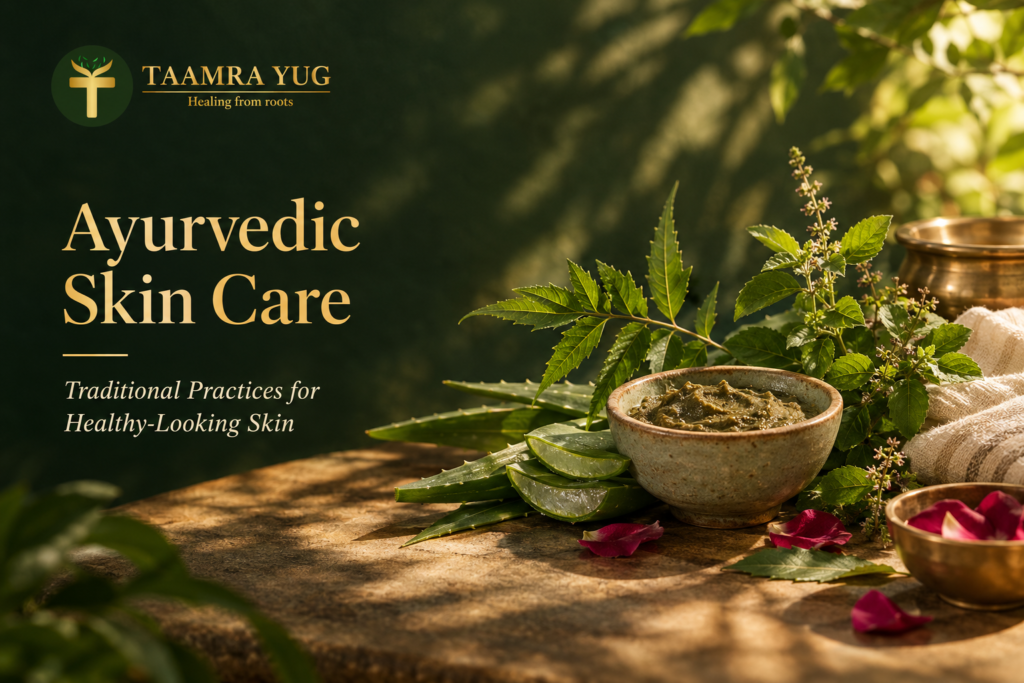
Healthy-looking skin is often supported by consistent daily care, suitable skincare products, balanced nutrition, and lifestyle habits. Ayurveda, the traditional Indian system of wellness, approaches skin care by considering individual needs, daily routines, and overall well-being rather than focusing only on external appearance.
Ayurvedic skin care combines traditional practices such as gentle cleansing, herbal applications, facial massage, and personalized routines. These practices can be adapted to different skin types, although the right approach depends on individual skin sensitivity and concerns.
In this guide, we explore traditional Ayurvedic skin care practices, commonly used ingredients, daily habits, and professional treatments that may complement a balanced skincare routine.
What Is Ayurvedic Skin Care?
Ayurvedic skin care is a traditional approach to maintaining skin health using personalized routines, plant-based ingredients, and lifestyle practices. In Ayurveda, skin is considered in the context of an individual’s constitution, environment, habits, and overall wellness.
Traditional Ayurvedic consultations may consider whether the skin tends to be dry, oily, sensitive, or prone to irritation before recommending suitable care.
However, Ayurvedic concepts are not a substitute for modern dermatological assessment. Persistent acne, eczema, unexplained rashes, or other ongoing skin concerns should be evaluated by a qualified healthcare professional.
Key Ayurvedic Skin Care Practices
1. Gentle Cleansing
Cleansing helps remove sweat, excess oil, sunscreen, makeup, and environmental impurities from the skin. Ayurvedic-inspired routines may incorporate mild, plant-derived ingredients, but natural ingredients are not automatically suitable for everyone.
Choose a gentle cleanser appropriate for your skin type. Avoid harsh scrubbing, excessively hot water, and products that leave your skin feeling tight or irritated.
2. Herbal Skin Care Ingredients
Several botanical ingredients are traditionally associated with Ayurvedic skin care. Their suitability depends on the formulation, concentration, and individual skin response.
- Aloe vera: Commonly used in soothing skincare formulations.
- Turmeric: Traditionally used in skin care, although it may irritate some people or temporarily stain the skin.
- Neem: Used in traditional preparations, but concentrated products can cause irritation.
- Sandalwood: Traditionally valued in cosmetic applications and aromatic skin care products.
- Rose: Often included in facial mists and skincare preparations.
Before applying a new ingredient to your face, test the product on a small area of skin. Avoid applying homemade mixtures containing unknown concentrations or potentially irritating ingredients.
3. Facial Massage
Gentle facial massage is sometimes included in Ayurvedic-inspired beauty routines. It may make a skincare routine feel relaxing and help distribute a suitable facial product.
Use clean hands and light pressure. Avoid vigorous rubbing, particularly if you have sensitive skin, active inflammation, broken skin, or a condition that becomes worse with friction.
Facial massage should be viewed as a complementary self-care practice rather than a guaranteed method for removing wrinkles, treating acne, or changing facial structure.
4. Nourishment and Hydration
Ayurveda emphasizes the relationship between daily habits and overall well-being. A balanced diet, adequate hydration, and consistent sleep can support general health, including the body’s normal skin functions.
Include a variety of vegetables, fruits, whole grains, protein sources, and healthy fats according to your nutritional needs. Drink water regularly, adjusting intake to your activity level and environment.
No single food or Ayurvedic ingredient can guarantee clear or glowing skin. Individual skin concerns may also be influenced by genetics, hormones, medication, and environmental factors.
Building a Daily Ayurvedic Skin Care Routine
A practical routine does not need to involve numerous products or complicated steps. Consistency and suitability are more important than using many ingredients.
Morning Routine
- Cleanse your face with a gentle cleanser if needed.
- Apply a moisturizer suited to your skin type.
- Use broad-spectrum sunscreen with SPF 30 or higher, following its application instructions.
Evening Routine
- Remove sunscreen, makeup, and accumulated impurities.
- Cleanse gently without scrubbing.
- Apply a suitable moisturizer.
- Introduce any additional skincare product gradually, monitoring your skin for irritation.
Traditional Ayurvedic practices can be incorporated into this routine where appropriate. They should not replace sunscreen, evidence-based skin care, or professional treatment when needed.
Ayurvedic Facials and Professional Skin Care
Some people prefer professional treatments as part of their self-care routine. Ayurvedic-inspired facials may include cleansing, gentle massage, and topical preparations selected according to individual preferences and skin sensitivity.
Two approaches worth exploring are:
Navara Facial
Navara-based treatments are associated with traditional Ayurvedic skin care practices. Depending on the treatment protocol, the experience may involve specialized preparations and professional application.
Learn more in our guide to Navara Facial: An Ayurvedic Approach to Nourished and Radiant Skin.
Ayurvedic Cosmetology Facials
Ayurvedic cosmetology facials bring traditional ingredients and skin-focused care together in a professional setting. Before choosing a facial, discuss your skin type, allergies, sensitivities, and current skincare products with the practitioner.
Read our article on: Ayurvedic Cosmetology Facials: A Traditional Approach to Skin Wellness.
Professional treatments are not suitable for every skin condition. If your skin is inflamed, damaged, or unusually sensitive, seek appropriate advice before undergoing a facial.
Common Ayurvedic Skin Care Mistakes to Avoid
Even well-intentioned skincare habits can cause problems when they are not suited to your skin.
- Assuming natural means safe: Herbal ingredients can trigger allergies and irritation.
- Trying too many products at once: Introduce new products gradually so you can identify possible reactions.
- Over-exfoliating: Excessive scrubbing can damage the skin barrier and worsen irritation.
- Skipping sunscreen: Sun protection remains important regardless of whether your routine uses Ayurvedic products.
- Expecting immediate results: Skin changes take time, and results vary depending on the person and the concern.
- Ignoring persistent symptoms: Ongoing rashes, painful acne, or sudden changes in the skin may require medical evaluation.
How to Choose the Right Ayurvedic Skin Care Approach
Start by identifying your primary concern, whether it is dryness, excess oil, sensitivity, or simply maintaining a consistent skincare routine. Consider your existing products, known allergies, and any skin conditions before adding traditional ingredients or professional treatments.
A qualified Ayurvedic practitioner can explain traditional options and help you understand whether they are appropriate for your needs. For diagnosed skin conditions, coordinate complementary practices with advice from a qualified dermatologist.
The best routine is one you can follow consistently without causing irritation or compromising essential skin protection.
Frequently Asked Questions
1. What is Ayurvedic skin care?
Ayurvedic skin care is a traditional approach that uses personalized routines, botanical preparations, and lifestyle practices to support skin care and general well-being.
2. Which Ayurvedic ingredients are commonly used for skin care?
Aloe vera, turmeric, neem, sandalwood, and rose are commonly associated with traditional or Ayurvedic-inspired skincare products. Their suitability varies, and some ingredients may cause irritation or allergic reactions.
3. Is Ayurvedic skin care suitable for every skin type?
Not every product or treatment suits every person. Skin sensitivity, allergies, existing conditions, and product formulation should be considered before trying a new approach.
4. Can Ayurvedic skin care replace a regular skincare routine?
No. Traditional practices can complement an appropriate routine, but gentle cleansing, moisturizing, and sun protection remain important. Persistent skin problems may require professional medical care.
5. How often should I get an Ayurvedic facial?
Frequency depends on the specific treatment, your skin’s response, and the practitioner’s recommendations. Avoid repeated treatments if you experience irritation, and seek medical advice for ongoing skin concerns.
Conclusion
Ayurvedic skin care offers a traditional perspective on maintaining healthy-looking skin through gentle routines, botanical preparations, mindful habits, and individualized care. The most suitable approach depends on your skin’s needs, and natural ingredients should always be selected with care.
At Taamra Yug Ayurveda, exploring traditional skin care treatments can be a starting point for a more personalized self-care routine. Learn about our Navara Facial and Ayurvedic Cosmetology Facials to understand the available approaches and discuss which option may be appropriate for you.