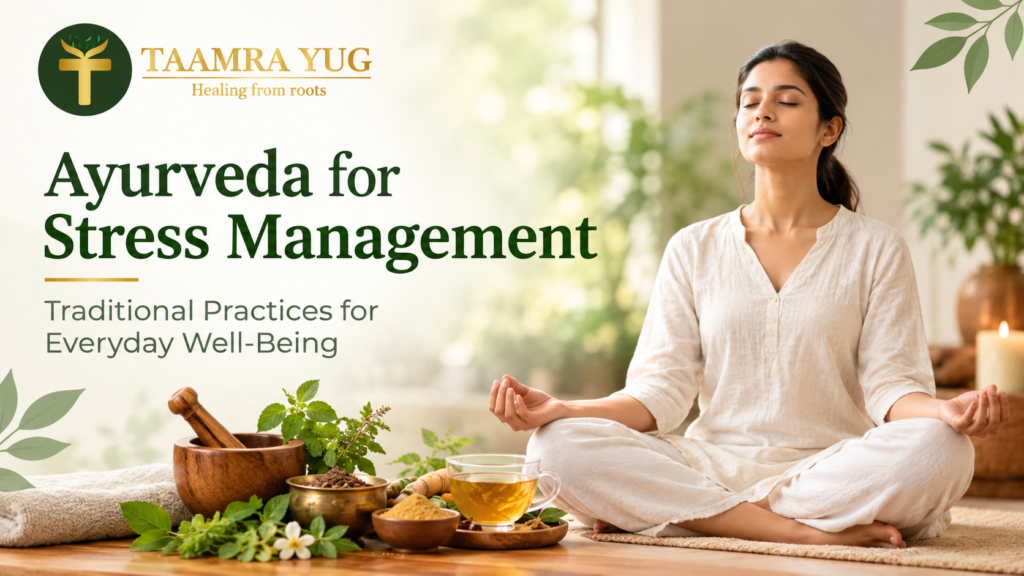
Busy schedules, work responsibilities, family commitments, and constant digital distractions can make it difficult to find time to relax. While some stress is a normal part of life, ongoing stress can affect sleep, concentration, mood, and everyday routines.
Ayurveda, the traditional Indian system of wellness, offers a holistic perspective that emphasizes daily habits, rest, mindful activities, and personalized self-care. Ayurveda for stress management focuses on practices that may support relaxation and a more balanced routine, rather than promising an instant solution to stress.
In this article, we explore traditional Ayurvedic approaches, practical relaxation techniques, and ways to incorporate them into everyday life.
Understanding Stress Through the Ayurvedic Perspective
Ayurveda traditionally considers the relationship between the mind, body, daily routines, and surrounding environment. Its concepts of Vata, Pitta, and Kapha are used to describe different patterns within its traditional framework.
In Ayurvedic philosophy, irregular routines and excessive stimulation may be discussed in relation to restlessness, while demanding schedules and limited recovery time may be considered when evaluating an individual’s overall well-being.
These concepts offer a traditional perspective, but they are not substitutes for modern psychological or medical assessment. Stress can have many causes, and the most appropriate support depends on its severity, duration, and effect on daily life.
1. Create a Consistent Daily Routine
A predictable routine can make everyday responsibilities feel more manageable. In Ayurveda, the traditional concept of Dinacharya emphasizes establishing regular daily habits.
You can apply this idea without following a complicated schedule:
- Wake up and go to bed at reasonably consistent times.
- Set realistic priorities for the day.
- Take short breaks between demanding tasks.
- Eat meals at regular times when possible.
- Leave space for rest and enjoyable activities.
Consistency does not mean every day must follow the same timetable. The goal is to create a routine that supports your responsibilities while allowing enough time for recovery.
2. Practice Gentle Breathing and Mindfulness
Breathing exercises and mindfulness can provide a simple way to pause during a busy day. Traditional Indian wellness practices include breathing techniques known as Pranayama, although different techniques have different purposes and levels of intensity.
For a beginner-friendly practice:
- Sit comfortably in a quiet place.
- Relax your shoulders and jaw.
- Breathe gently through your nose if comfortable.
- Allow your breathing to slow naturally without forcing it.
- Continue for a few minutes, returning your attention to your breath when your mind wanders.
Stop if you feel dizzy, breathless, or uncomfortable. Avoid forceful breathing techniques unless you have received appropriate instruction.
Mindfulness can also involve taking a quiet walk, noticing your surroundings, or spending a few minutes away from screens. These activities may help create a calmer daily rhythm, although their effects vary between individuals.
3. Explore Abhyanga: Traditional Ayurvedic Oil Massage
Abhyanga is a traditional Ayurvedic oil massage that involves applying oil to the body using specific massage techniques. It is commonly included in Ayurvedic self-care and wellness routines.
Some people find a gentle massage relaxing, particularly when it takes place in a quiet setting with time to unwind.
Depending on individual circumstances, an Abhyanga session may involve:
- Selecting an appropriate massage oil.
- Applying oil using gentle, controlled movements.
- Allowing time for the treatment according to the practitioner’s guidance.
- Following suitable aftercare instructions.
Oil selection and massage techniques should account for skin sensitivity, allergies, and personal health conditions. Professional advice is recommended before massage if you have a medical condition, an injury, or another concern that could affect treatment suitability.
Read more in our guide to Abhyanga Therapy: Benefits and Procedure.
4. Learn About Shirodhara Therapy
Shirodhara is a traditional Ayurvedic procedure in which a steady stream of liquid, often oil, is directed over the forehead by a trained practitioner.
The treatment is associated with relaxation in Ayurvedic practice and may appeal to people who prefer a supervised wellness experience in a calm environment.
Before choosing Shirodhara, ask the practitioner about the procedure, the liquid used, expected duration, hygiene standards, and any precautions relevant to your health.
It is important to understand that Shirodhara is not a guaranteed treatment for chronic stress, anxiety, depression, or insomnia. If you experience persistent emotional distress or difficulty sleeping, consult an appropriate healthcare professional.
Explore our detailed guide to Shirodhara Therapy.
5. Prioritize Sleep and Rest
Rest plays an important role in everyday well-being. When work or personal responsibilities extend late into the evening, it can become difficult to maintain a healthy sleep routine.
Consider these practical habits:
- Establish a consistent bedtime.
- Reduce screen use before sleeping.
- Keep your bedroom comfortable and quiet.
- Avoid caffeine late in the day if it affects your sleep.
- Create a relaxing pre-sleep ritual, such as reading or gentle stretching.
Traditional Ayurvedic routines may include calming evening activities, but good sleep habits should be adapted to your circumstances and needs.
If sleep difficulties continue or interfere with daily functioning, seek medical advice rather than relying solely on relaxation practices.
6. Support Your Routine With Balanced Nutrition and Movement
Everyday food choices and physical activity can contribute to general health and well-being. Ayurveda traditionally places importance on mindful eating and routines suited to the individual.
A practical approach includes eating balanced meals, staying hydrated, and choosing physical activities you enjoy.
Walking, gentle yoga, stretching, or other suitable exercise can provide a break from prolonged sitting and help establish a healthier daily rhythm. Begin at a comfortable level and adjust activity according to your fitness and health.
Avoid restrictive diets or unverified herbal products marketed as stress remedies. Herbal preparations can interact with medicines and may cause side effects, so seek advice from a qualified healthcare professional before using them.
7. Build a Personalized Stress-Management Routine
There is no single approach that works for everyone. Some people benefit from quiet activities, while others prefer movement, social connection, structured planning, or professional support.
You could begin with a simple routine:
Morning: Spend five minutes breathing gently or setting priorities for the day.
During work: Take short breaks, stretch, and step away from screens when possible.
Evening: Reduce stimulating activities, enjoy a relaxing hobby, and prepare for sleep.
Weekly: Make time for activities you enjoy and review whether your routine is helping you feel more rested.
Traditional Ayurvedic therapies may be considered as optional complementary practices when appropriate. The aim is to develop sustainable habits rather than depend on one treatment to manage every source of stress.
When Should You Seek Professional Support?
Occasional stress is common, but persistent stress may require more than lifestyle changes. Consider seeking professional support if stress regularly disrupts sleep, work, relationships, or everyday activities.
Speak with a qualified healthcare or mental health professional if you experience ongoing anxiety, low mood, panic symptoms, or difficulty coping. Ayurvedic wellness practices should complement appropriate care rather than replace it.
Frequently Asked Questions
1. How does Ayurveda approach stress management?
Traditional Ayurveda emphasizes daily routines, rest, mindful activities, and individualized self-care. Practices may include gentle breathing, massage, and other wellness therapies, depending on personal needs.
2. Which Ayurvedic therapy is commonly associated with relaxation?
Abhyanga and Shirodhara are traditional Ayurvedic practices associated with relaxation. Their suitability depends on individual health, treatment protocols, and practitioner guidance.
3. Can Ayurvedic practices cure anxiety or chronic stress?
There is no guarantee that Ayurvedic practices will resolve anxiety or chronic stress. Persistent symptoms should be assessed by a qualified healthcare professional, and traditional practices should be considered complementary when appropriate.
4. Can beginners try Ayurvedic relaxation practices at home?
Beginners can start with simple habits such as gentle breathing, regular sleep times, quiet walks, and mindful breaks. Specialized treatments and intensive breathing practices should be approached with appropriate guidance.
5. How often should I receive an Ayurvedic massage?
The appropriate frequency depends on the type of massage, your preferences, health considerations, and the practitioner’s advice. There is no universal schedule that suits everyone.
Conclusion
Ayurveda for stress management offers a traditional framework for building a more mindful daily routine through rest, gentle movement, breathing practices, and personalized self-care. These habits may complement other approaches to well-being, but their effects differ from person to person.
At Taamra Yug Ayurveda, you can learn more about traditional wellness practices such as Abhyanga Therapy and Shirodhara Therapy. Explore the available options with a qualified practitioner to understand which approach may suit your individual needs.