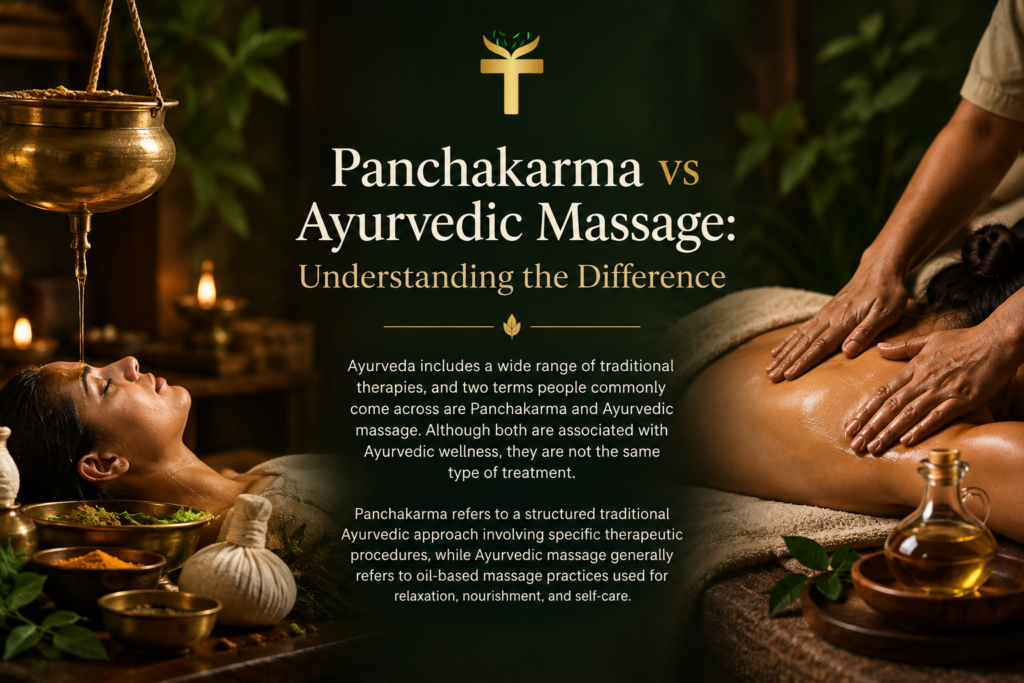
The idea of “detox” has become common in modern wellness conversations, with many diets, drinks, supplements, and short-term programs promoted as ways to cleanse the body. Ayurveda approaches the concept differently. Rather than relying on a quick cleanse, traditional Ayurvedic practice focuses on individualized routines, diet, lifestyle, and specific therapies selected according to a person’s needs.
Ayurvedic Detox is therefore best understood as a traditional wellness approach rather than a single treatment or a one-day cleansing program. Depending on the individual’s assessment, an Ayurvedic practitioner may recommend dietary adjustments, lifestyle practices, or therapies that are traditionally associated with cleansing and restoring balance.
What Is Ayurvedic Detox?
In the Ayurvedic tradition, detoxification is often discussed in relation to Panchakarma, a structured group of traditional procedures intended to support the body’s natural processes through carefully planned therapies.
An Ayurvedic detox program may involve preparation, a specific treatment phase, and a period of post-treatment care. The exact approach depends on the individual’s constitution, current condition, lifestyle, age, and other factors considered by the practitioner.
This means an Ayurvedic detox should not be viewed as a standard program that is identical for everyone.
How Does Ayurvedic Detox Work?
Traditional Ayurvedic detox programs generally involve more than the main treatment itself. A practitioner may consider three broad stages.
1. Preparation
Before certain Panchakarma procedures, traditional Ayurvedic practice may include preparatory measures. These can involve dietary adjustments, oil-based therapies, or other practices intended to prepare the person for the planned treatment.
The preparation stage varies depending on the therapy and individual assessment.
2. Main Therapy
The main procedure depends on the treatment plan. Traditional Panchakarma includes procedures such as:
- Vamana – therapeutic emesis performed under professional supervision
- Virechana – controlled therapeutic purgation
- Basti – administration of selected preparations through the rectal route
- Nasya – administration of selected herbal preparations through the nasal route
- Raktamokshana – a traditional bloodletting procedure
Not every person receives every procedure. The appropriate therapy should be determined by a qualified Ayurvedic practitioner.
3. Post-Treatment Care
After the main procedure, traditional Ayurvedic practice places importance on gradual recovery and dietary care.
The practitioner may recommend specific foods, rest, lifestyle adjustments, and other measures depending on the treatment received.
What Are the Traditional Benefits of Ayurvedic Detox?
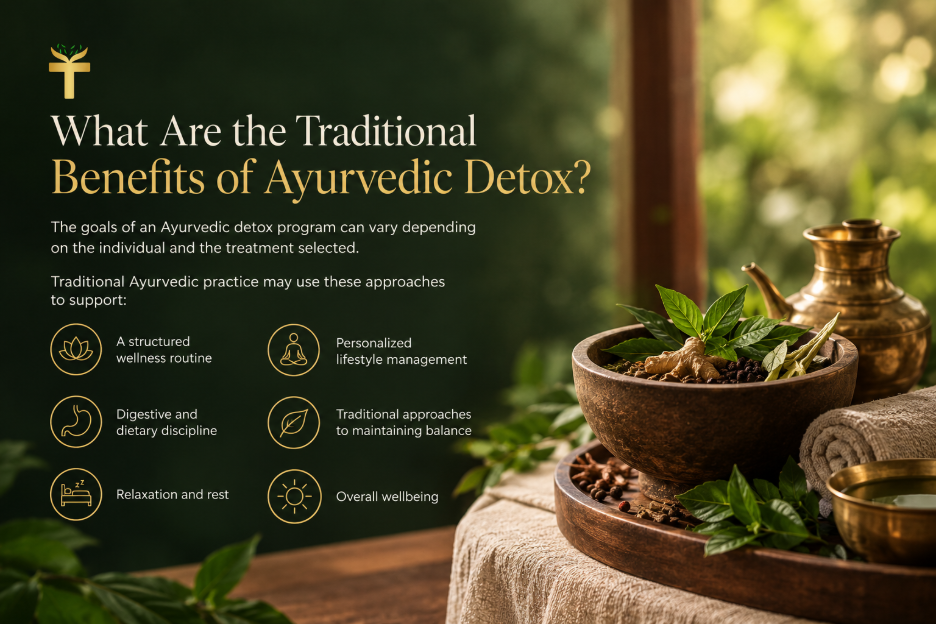
The goals of an Ayurvedic detox program can vary depending on the individual and the treatment selected.
Traditional Ayurvedic practice may use these approaches to support:
- A structured wellness routine
- Digestive and dietary discipline
- Relaxation and rest
- Personalized lifestyle management
- Traditional approaches to maintaining balance
- Overall wellbeing
These should be understood as traditional Ayurvedic wellness objectives rather than guaranteed medical outcomes.
Modern “detox” claims are often much broader than what can be supported scientifically. An Ayurvedic detox should therefore not be presented as a guaranteed way to remove unspecified “toxins” or cure a medical condition.
Ayurvedic Detox and Panchakarma: What’s the Difference?
The terms are sometimes used interchangeably, but they are not exactly the same.
Ayurvedic detox is a broader wellness concept that may include dietary, lifestyle, and traditional cleansing practices.
Panchakarma refers specifically to a classical Ayurvedic framework involving selected therapeutic procedures.
Panchakarma may therefore form part of an Ayurvedic detox or cleansing program, but not every Ayurvedic wellness routine is Panchakarma.
Understanding this distinction can help people avoid choosing a treatment based solely on general “detox” claims.
Which Ayurvedic Therapies Are Associated With Detox?
Several of the therapies you may come across in Ayurvedic detox discussions are already covered in detail in our treatment resources.
Virechana Therapy
Virechana is a traditional Ayurvedic procedure involving controlled therapeutic purgation. It is commonly discussed within Panchakarma and is traditionally associated with Pitta-related approaches.
Basti Therapy
Basti is another important Panchakarma procedure involving the administration of selected herbal or medicated preparations through the rectal route. The type of Basti and its suitability depend on individual assessment.
Vaman Therapy
Vaman is a traditional Panchakarma procedure involving therapeutic emesis under professional supervision. It should never be attempted as a self-directed detox method.
Nasya Therapy
Nasya involves the administration of selected preparations through the nasal route. It is traditionally included among the Panchakarma procedures and may be incorporated into a broader treatment plan when appropriate.
Is Ayurvedic Detox Suitable for Everyone?
No. A detox or Panchakarma program should not be assumed to be appropriate for everyone.
Suitability can depend on factors such as age, general health, current medications, pregnancy, existing medical conditions, strength, and the specific therapy being considered.
People with significant or persistent symptoms should seek appropriate medical evaluation rather than attempting to manage a health problem through a detox program.
Anyone considering Panchakarma or a therapeutic Ayurvedic procedure should consult a qualified practitioner before beginning.
How Long Does an Ayurvedic Detox Take?
There is no fixed duration.
Some Ayurvedic wellness routines may be relatively short, while structured Panchakarma programs can involve preparation, treatment, and recovery phases.
The duration depends on the individual’s treatment plan and the procedures selected. A practitioner can explain the expected timeline during the consultation.
Ayurvedic Detox vs. Quick Detox Programs
Modern detox programs may promote juice fasts, restrictive diets, supplements, or short-term cleanses.
An Ayurvedic approach is generally more structured and individualized. Instead of focusing only on a short period of restriction, traditional Ayurvedic practice may consider diet, daily routine, preparation, therapy, and post-treatment care together.
This is one reason it is important not to treat an Ayurvedic detox as equivalent to an internet-based cleanse or fasting program.
Frequently Asked Questions
Is Ayurvedic Detox the same as Panchakarma?
No. Ayurvedic detox is a broader wellness concept, while Panchakarma refers to a specific traditional Ayurvedic framework involving selected therapeutic procedures.
Can I do an Ayurvedic Detox at home?
Simple healthy routines and dietary practices may be incorporated into everyday wellness, but therapeutic procedures such as Vaman, Virechana, or Basti should not be performed without qualified professional supervision.
How often should I do an Ayurvedic Detox?
There is no universal schedule. Frequency should depend on your individual needs and the recommendations of a qualified Ayurvedic practitioner.
Does Ayurvedic Detox remove toxins from the body?
Traditional Ayurveda uses the concept of accumulated impurities and imbalance differently from modern medical terminology. Claims that a detox will remove unspecified toxins should be treated cautiously. The body already has organs such as the liver and kidneys that perform important waste-processing functions.
Can Ayurvedic Detox help with weight loss?
Weight loss should not be the primary reason to undertake a therapeutic Ayurvedic detox. Sustainable weight management generally involves appropriate nutrition, physical activity, sleep, and other lifestyle factors.
Should I consult a practitioner before Panchakarma?
Yes. Panchakarma procedures can be intensive and are not suitable for everyone. Individual assessment is important before beginning a program.
A Personalized Approach to Ayurvedic Wellness
Ayurvedic Detox is best understood as a traditional and personalized approach rather than a quick cleansing trend. Depending on individual needs, it may involve dietary preparation, lifestyle practices, Panchakarma procedures, and appropriate post-treatment care.
At Taamra Yug Ayurveda, Ayurvedic therapies are approached with attention to individual requirements and traditional principles. A consultation can help determine whether a particular Ayurvedic treatment or Panchakarma approach is appropriate for you.
If you are considering an Ayurvedic detox, speak with a qualified practitioner before beginning, especially if you have an existing medical condition, take medications, or are considering a therapeutic Panchakarma procedure.