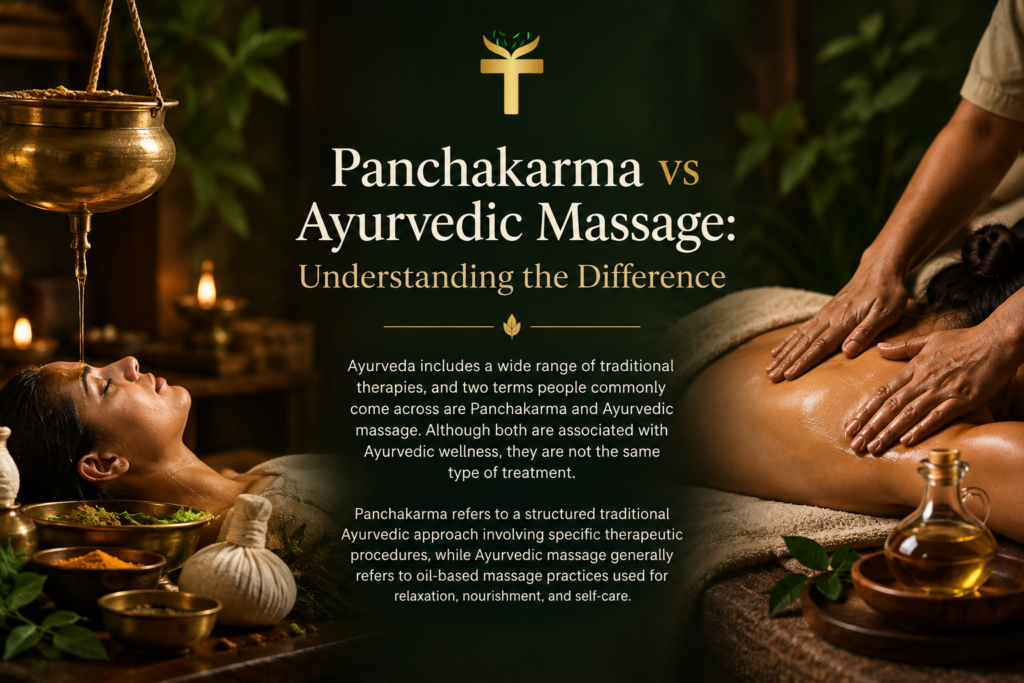
Ayurveda includes a wide range of traditional therapies, and two terms people commonly come across are Panchakarma and Ayurvedic massage. Although both are associated with Ayurvedic wellness, they are not the same type of treatment.
Panchakarma refers to a structured traditional Ayurvedic approach involving specific therapeutic procedures, while Ayurvedic massage generally refers to oil-based massage practices used for relaxation, nourishment, and self-care.
Understanding the difference between Panchakarma vs Ayurvedic Massage can help you have a clearer conversation with an Ayurvedic practitioner about your wellness goals and which type of approach may be appropriate.
What Is Panchakarma?
Panchakarma is a classical Ayurvedic framework involving a selection of traditional therapeutic procedures. The word is commonly associated with five principal actions, although the exact procedures included in a treatment program can vary depending on the practitioner and individual assessment.
Traditional Panchakarma procedures include:
- Vamana
- Virechana
- Basti
- Nasya
- Raktamokshana
Panchakarma is not simply a massage or spa treatment. A traditional Panchakarma program may involve preparation, one or more selected procedures, and post-treatment care.
The treatment is generally planned according to individual factors rather than following one standard protocol for everyone.
What Is Ayurvedic Massage?
Ayurvedic massage generally involves the application of herbal or medicated oils using traditional massage techniques.
One of the best-known examples is Abhyanga Therapy, a traditional Ayurvedic oil massage that can be incorporated into a personal wellness and self-care routine.
Other Ayurvedic therapies may also involve massage or oil application as part of their overall process.
Compared with Panchakarma, Ayurvedic massage is generally simpler and is often associated with relaxation, nourishment, and routine wellness care.
Panchakarma vs Ayurvedic Massage: Key Differences
The biggest difference between Panchakarma vs Ayurvedic Massage is their purpose, structure, intensity, and treatment planning.
| Feature | Panchakarma | Ayurvedic Massage |
| Main approach | Structured traditional therapeutic program | Traditional massage and wellness practice |
| Examples | Vamana, Virechana, Basti, Nasya | Abhyanga and other oil-based therapies |
| Preparation | May require specific preparation | Usually simpler preparation |
| Treatment planning | Highly individualized | Can also be personalized |
| Duration | May involve multiple stages | Often completed as an individual session |
| Aftercare | May include specific dietary and lifestyle guidance | Usually simpler aftercare |
| Primary context | Traditional Ayurvedic therapeutic programs | Relaxation, self-care and wellness |
The exact approach can vary between practitioners and according to the individual’s needs.
When Might Panchakarma Be Considered?
Panchakarma may be considered when someone is interested in a structured traditional Ayurvedic program rather than a single relaxation treatment.
A practitioner may first assess the person’s constitution, lifestyle, current condition, age, strength, and other relevant factors before deciding whether Panchakarma is appropriate.
Different procedures may then be selected according to the individual’s needs.
For example, Virechana Therapy involves traditional therapeutic purgation, while Basti Therapy involves the administration of selected preparations through the rectal route. Vaman Therapy and Nasya Therapy are other traditional procedures that may be considered in appropriate circumstances.
These procedures should not be self-administered or selected simply by matching symptoms to an online article.
When Might Ayurvedic Massage Be Considered?
Ayurvedic massage may be more suitable for someone looking for a simpler wellness or self-care experience.
People may consider traditional massage when they are interested in:
- Relaxation
- A regular self-care routine
- Traditional oil massage
- A calming wellness experience
- Nourishing the skin
- Supporting general body comfort
Abhyanga Therapy is a common example of this approach. It uses oil and traditional massage techniques and can be adapted according to individual requirements.
Is Panchakarma More Intensive Than Ayurvedic Massage?
Generally, yes, but the two should not be viewed simply as “strong” and “weak” versions of the same treatment.
They serve different purposes.
Panchakarma can involve specific therapeutic procedures, preparation, dietary considerations, and post-treatment care. Ayurvedic massage is generally a more straightforward wellness treatment.
The appropriate option depends on the person’s goals and individual assessment rather than which treatment appears more intensive.
Can Ayurvedic Massage Be Part of Panchakarma?
Yes, depending on the treatment plan.
Traditional Ayurvedic programs may include oil-based therapies or massage as part of preparation or supportive care around other procedures.
For example, Abhyanga may be incorporated into a broader Ayurvedic program when considered appropriate by the practitioner.
However, receiving an Ayurvedic massage does not mean that someone is undergoing Panchakarma.
Which One Should You Choose?
The answer depends on what you are looking for.
Choose Ayurvedic Massage If:
You are primarily interested in relaxation, traditional oil massage, personal wellness, or a simpler self-care experience.
Consider Discussing Panchakarma If:
You are interested in a structured Ayurvedic program involving traditional therapeutic procedures and are willing to undergo an individual assessment and appropriate preparation.
Start With a Consultation If:
You are unsure which approach is right for you.
A consultation allows a qualified practitioner to understand your goals, lifestyle, concerns, and overall condition before recommending a treatment.
What About Shirodhara and Pottali Therapy?
Not every Ayurvedic treatment falls neatly into the categories of “Panchakarma” or “massage.”
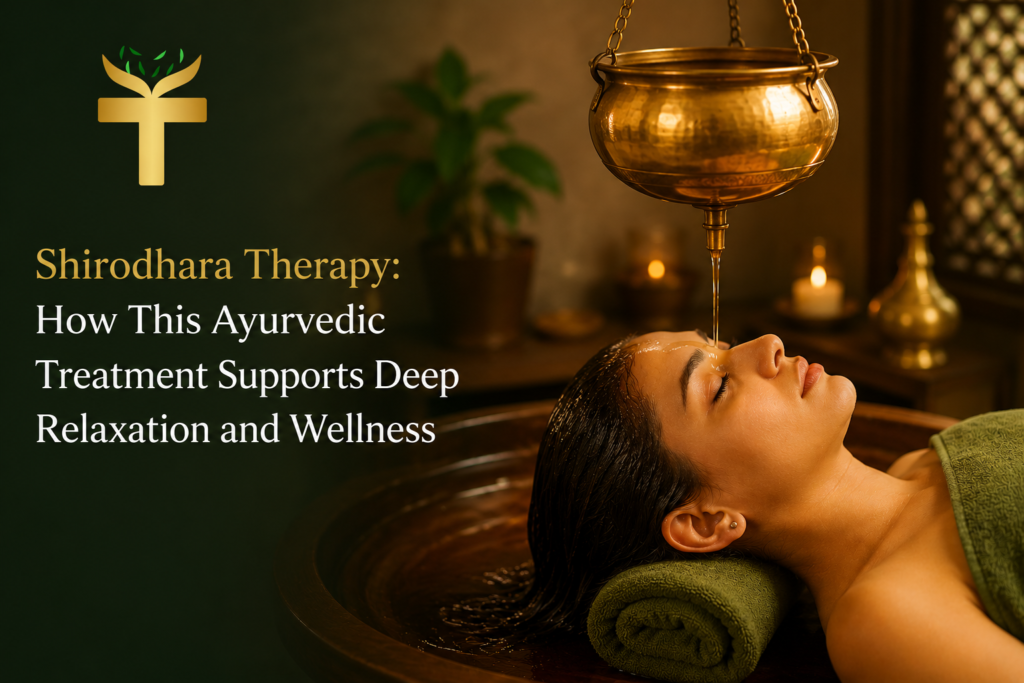
For example, Shirodhara Therapy involves the controlled pouring of a selected liquid over the forehead and is traditionally used as a calming wellness treatment.
Pottali Therapy uses herbal boluses as part of a traditional Ayurvedic treatment approach.
This is why it is better to discuss your specific wellness goals with a practitioner rather than assuming that every Ayurvedic treatment belongs to one category.
Safety and Professional Guidance
Panchakarma procedures can be unsuitable for some people, and certain therapies require professional supervision.
You should inform your practitioner about medications, allergies, pregnancy, existing medical conditions, or other relevant health information before beginning treatment.
Ayurvedic therapies should also not replace appropriate medical care. If you have persistent pain, unexplained symptoms, significant illness, or another medical concern, seek evaluation from an appropriate healthcare professional.
Frequently Asked Questions
Is Panchakarma the same as Ayurvedic massage?
No. Panchakarma is a structured traditional Ayurvedic therapeutic framework, while Ayurvedic massage generally refers to oil-based massage practices used as part of wellness and self-care.
Is Abhyanga part of Panchakarma?
Abhyanga can sometimes be incorporated into a broader Ayurvedic treatment program, including preparation for certain traditional procedures, but Abhyanga itself is not synonymous with Panchakarma.
Which is better: Panchakarma or Ayurvedic massage?
Neither is universally “better.” They have different purposes. The appropriate choice depends on your individual needs, wellness goals, and professional assessment.
How long does Panchakarma take?
A Panchakarma program can vary significantly in duration because preparation, treatment, and post-treatment care may all be involved.
Can I get Ayurvedic massage regularly?
Some people incorporate Ayurvedic massage into their wellness routines. The appropriate frequency depends on the individual, the massage technique, and the practitioner’s recommendations.
Do I need a consultation before Panchakarma?
Yes. Because Panchakarma involves specific therapeutic procedures and may require preparation, an individual assessment by a qualified practitioner is important.
Finding the Right Ayurvedic Approach
Understanding Panchakarma vs Ayurvedic Massage is useful because the two approaches serve different purposes. Ayurvedic massage may be appropriate for people seeking traditional oil-based relaxation and self-care, while Panchakarma involves a more structured therapeutic framework with specific procedures and preparation.
At Taamra Yug Ayurveda, treatment recommendations can be personalized according to individual needs and traditional Ayurvedic principles. A consultation can help you understand which approach may be appropriate rather than choosing a treatment based only on general information online.
If you are considering Panchakarma or Ayurvedic massage, discuss your wellness goals and expectations with a qualified practitioner before beginning treatment.