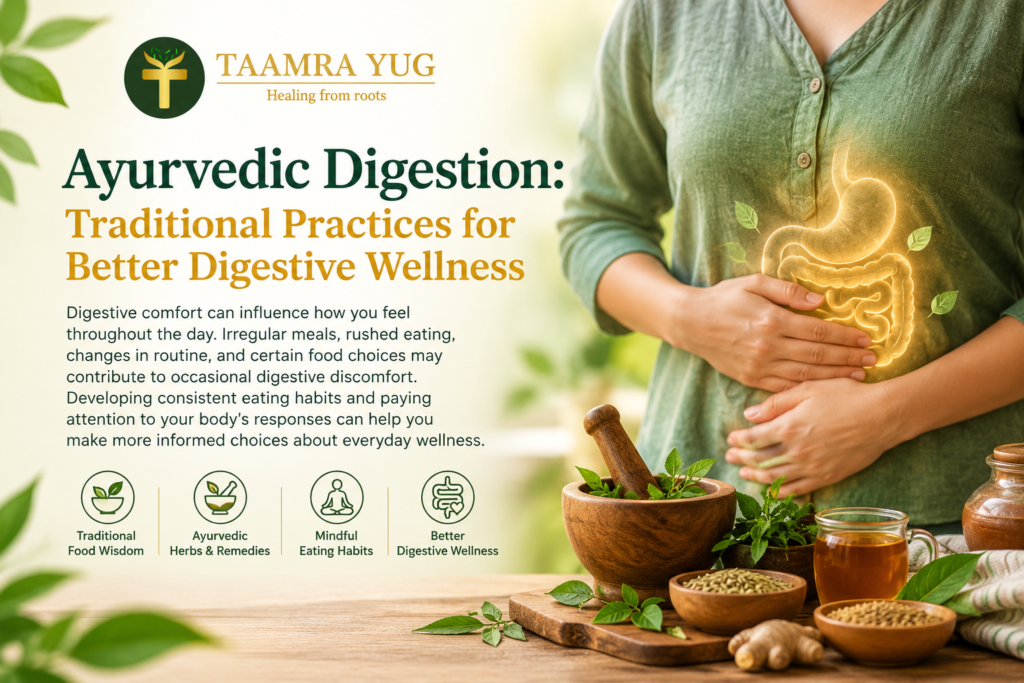

Digestive comfort can influence how you feel throughout the day. Irregular meals, rushed eating, changes in routine, and certain food choices may contribute to occasional digestive discomfort. Developing consistent eating habits and paying attention to your body’s responses can help you make more informed choices about everyday wellness.
Ayurveda, the traditional Indian system of wellness, places considerable importance on digestion as part of its broader approach to health. Ayurvedic digestion is commonly discussed through the traditional concept of Agni, often described as digestive fire, alongside dietary habits, daily routines, and individual needs.
In this guide, we explore how Ayurveda approaches digestive wellness, traditional dietary practices, practical daily habits, and when digestive symptoms may require professional medical attention.
What Is Digestion According to Ayurveda?
In Ayurvedic philosophy, Agni represents the processes associated with digestion and transformation. Traditional Ayurvedic guidance often considers appetite, meal timing, food choices, and individual responses when discussing digestive well-being.
Modern medicine explains digestion through the coordinated functions of the gastrointestinal tract, digestive enzymes, gut movement, and the absorption of nutrients. Although Ayurvedic concepts provide a traditional framework, they should not be treated as direct equivalents of specific medical measurements.
A practical approach to digestive wellness can consider traditional habits alongside established nutritional guidance and medical advice when needed.
For a broader understanding of how everyday habits fit into Ayurvedic principles, read our article on Ayurvedic Lifestyle: Daily Habits for Balanced Living.
1. Eat Meals at Consistent Times
One traditional Ayurvedic recommendation is to maintain a regular eating routine. While everyone’s schedule is different, having reasonably consistent meal times can help establish predictable daily habits.
Try these simple practices:
- Avoid regularly skipping meals if it leaves you excessively hungry later.
- Take enough time to eat without rushing.
- Pay attention to hunger and fullness cues.
- Choose meal timings that fit your work and sleep schedule.
- Avoid eating in a way that regularly causes uncomfortable fullness.
There is no single meal schedule that suits everyone. Your age, activity level, medical needs, and personal routine all influence your nutritional requirements.
2. Practice Mindful Eating
Mindful eating means paying attention to your food, eating pace, and physical responses rather than treating every meal as another task to finish.
You can make meals more mindful by chewing comfortably, limiting distractions when possible, and noticing how different foods affect your comfort.
Ayurvedic traditions also emphasize eating in a calm setting. Although this practice does not guarantee better digestion, it can help you become more aware of your eating habits.
If you frequently experience bloating, heartburn, abdominal pain, or changes in bowel habits, keep track of possible triggers and discuss persistent symptoms with a healthcare professional rather than relying only on dietary experimentation.
3. Choose a Balanced and Varied Diet
Food choices are an important part of digestive health. A balanced diet can provide fibre, vitamins, minerals, protein, and other nutrients required for normal bodily functions.
Consider including:
- Vegetables and fruits: These provide fibre and a variety of nutrients.
- Whole grains: Oats, whole-wheat products, and other whole grains can contribute dietary fibre.
- Pulses and legumes: Lentils, chickpeas, and beans provide fibre and plant-based protein.
- Suitable protein sources: Include foods that meet your nutritional preferences and needs.
- Adequate fluids: Drink enough water throughout the day.
Increase fibre gradually if your current intake is low, as a sudden increase may cause gas or bloating. Some foods that are nutritious can still trigger symptoms in certain individuals, so personal tolerance matters.
Ayurveda also considers individual dietary preferences and traditional constitutional types. These ideas can be explored as part of traditional guidance, but restrictive diets should not be followed without a clear reason or suitable professional advice.
4. Understand Common Ayurvedic Digestive Practices
Traditional Ayurveda includes several practices associated with digestive wellness. Their suitability and evidence differ, and they should not be considered necessary for everyone.
Warm Water and Everyday Hydration
Drinking water regularly supports hydration, which is important for normal bodily functions. Some Ayurvedic routines recommend warm water, but there is no need for everyone to drink it exclusively.
Choose a temperature that feels comfortable, and avoid water hot enough to burn your mouth. Adequate overall fluid intake is more important than following a specific temperature ritual.
Gentle Movement After Meals
A relaxed walk after eating can be a practical addition to a daily routine. Some people find that gentle movement feels more comfortable than lying down immediately after a meal.
If you experience acid reflux, avoiding lying down for a few hours after eating may also help. Adjust your routine according to your symptoms and medical advice.
A Consistent Daily Routine
Ayurvedic practices often emphasize regular sleeping, waking, and eating times. A predictable routine can make it easier to maintain balanced meals, physical activity, and sufficient rest.
Explore our guide to Ayurveda for Stress Management for additional ideas on mindful habits and managing the demands of daily life.
5. How Stress and Sleep Can Affect Digestive Comfort

The digestive system and nervous system communicate through several pathways. Stress can influence digestive symptoms, including abdominal discomfort and changes in bowel habits, although the effects vary from person to person.
Helpful everyday habits may include:
- Maintaining a reasonably consistent sleep schedule.
- Taking breaks during demanding work.
- Practising gentle breathing or mindfulness.
- Engaging in suitable physical activity.
- Making time for relaxing activities.
These habits may support general well-being, but they are not substitutes for evaluating persistent digestive symptoms.
If stress appears to worsen your symptoms, a healthcare professional can help determine whether further assessment or additional support would be useful.
6. Ayurvedic Therapies and Digestive Wellness
Some Ayurvedic therapies are traditionally associated with digestive health. These treatments can involve specific procedures and should not be confused with routine dietary habits.
Basti Therapy
Basti is a traditional Ayurvedic procedure involving the administration of prescribed substances, commonly through the rectal route, under a defined treatment protocol.
It is not a routine home remedy and may carry risks. Anyone considering this procedure should discuss its purpose, safety, and suitability with qualified healthcare professionals.
Learn more in our article on Basti Therapy: Traditional Ayurvedic Uses and Procedure.
Virechana Therapy
Virechana is a traditional Ayurvedic procedure involving therapeutic purgation under professional supervision. It may involve preparation, a prescribed procedure, and aftercare.
It should not be undertaken independently as a way to manage digestive symptoms or lose weight. Purgative procedures can cause dehydration, electrolyte disturbances, and other complications.
Read our guide to Virechana Therapy: Process and Traditional Ayurvedic Approach.
Ayurvedic Detox Practices
Some people encounter digestive cleansing as part of broader Ayurvedic detoxification discussions. However, the term detox is often used loosely in wellness marketing.
The body already has systems, including the liver and kidneys, that process and eliminate waste. Cleansing regimens, laxatives, or restrictive diets are not necessary for everyone and may be harmful.
For more context, read our article on Ayurvedic Detox: Understanding Traditional Detoxification Practices.
Traditional procedures should be considered only after a proper assessment. They should never replace medical evaluation or evidence-based treatment for digestive disorders.
7. Common Digestive Habits to Reconsider
Small adjustments may help you identify habits that contribute to discomfort.
- Eating too quickly: Slow down enough to eat comfortably.
- Increasing fibre too suddenly: Increase fibre gradually and drink adequate fluids.
- Ignoring food-related symptoms: Track recurring symptoms and discuss them with a healthcare professional.
- Using laxatives or herbal cleanses without advice: These may cause side effects or interact with medicines.
- Following highly restrictive diets: Unnecessary restrictions can make it harder to meet nutritional needs.
- Ignoring persistent symptoms: Recurrent or worsening discomfort deserves appropriate assessment.
Seek urgent medical care for severe abdominal pain, vomiting blood, black or bloody stools, or signs of significant dehydration. Persistent symptoms, unexplained weight loss, difficulty swallowing, or ongoing changes in bowel habits should also be evaluated by a healthcare professional.
Frequently Asked Questions
1. What is Ayurvedic digestion?
Ayurvedic digestion refers to the traditional Ayurvedic understanding of digestive processes, often discussed through the concept of Agni. It includes traditional perspectives on eating habits, daily routines, and individual dietary needs.
2. Which foods are good for digestive wellness?
A varied diet containing vegetables, fruits, whole grains, suitable protein sources, and adequate fluids can support general digestive health. Individual needs and food tolerances differ.
3. Does drinking warm water improve digestion?
Warm water can contribute to daily fluid intake, but strong evidence that it improves digestion more than water at other comfortable temperatures is limited. Adequate hydration is the main consideration.
4. Are Ayurvedic digestive therapies suitable for everyone?
No. Procedures such as Basti and Virechana require careful assessment and professional supervision. They can carry risks and should not be used as self-treatment for digestive symptoms.
5. When should I see a doctor about digestive problems?
Seek medical advice if symptoms persist, recur frequently, worsen, or affect everyday life. Severe pain, blood in vomit or stools, or signs of significant dehydration require urgent medical attention.
Conclusion
Ayurvedic digestion offers a traditional perspective on digestive wellness through mindful eating, balanced nutrition, consistent routines, and individualized care. These principles can complement sensible everyday habits, but persistent digestive symptoms should not be attributed to an imbalance without appropriate assessment.
At Taamra Yug Ayurveda, you can explore traditional approaches through our articles on Ayurvedic Lifestyle, Basti Therapy, and Virechana Therapy. If you are considering an Ayurvedic procedure, discuss its potential benefits and risks with a qualified practitioner and consult a healthcare professional for ongoing digestive concerns.