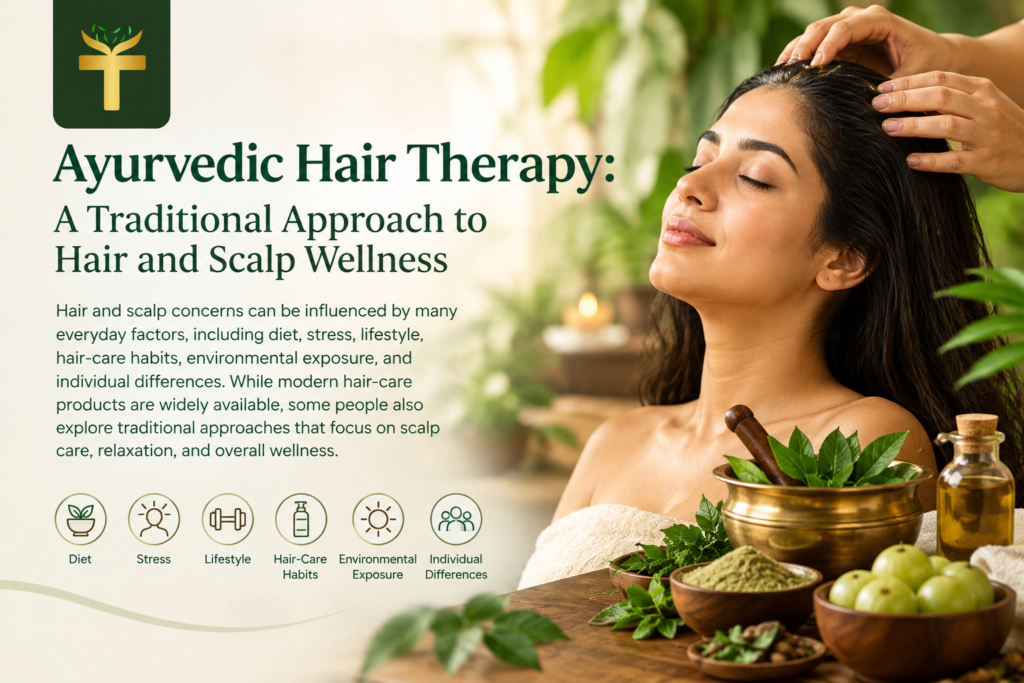
Hair and scalp concerns can be influenced by many everyday factors, including diet, stress, lifestyle, hair-care habits, environmental exposure, and individual differences. While modern hair-care products are widely available, some people also explore traditional approaches that focus on scalp care, relaxation, and overall wellness.
Ayurvedic Hair Therapy is one such approach.
Ayurveda traditionally uses herbal oils, massage techniques, herbal preparations, and personalized lifestyle recommendations as part of hair and scalp care. Rather than treating every person in exactly the same way, Ayurvedic practitioners may consider an individual’s constitution, lifestyle, scalp condition, and overall wellness before recommending a treatment.
What Is Ayurvedic Hair Therapy?
Ayurvedic Hair Therapy refers to traditional Ayurvedic approaches used to support hair and scalp wellness.
Depending on the individual’s needs and the treatment centre, an Ayurvedic hair-care program may involve:
- Herbal oil application
- Scalp massage
- Traditional Ayurvedic hair treatments
- Herbal preparations
- Relaxation-focused therapies
- Diet and lifestyle recommendations
- Personalized scalp and hair-care guidance
The exact treatment can vary from one person to another.
This personalized approach is an important part of Ayurveda because the same hair or scalp routine may not be suitable for everyone.
Why Consider Ayurvedic Hair Therapy?
People may explore Ayurvedic hair therapies for several reasons. Some may want to improve their scalp-care routine, while others may simply prefer traditional wellness practices.
Common reasons for exploring Ayurvedic hair care include:
- Supporting scalp nourishment
- Maintaining healthy-looking hair
- Incorporating traditional herbal oils into a routine
- Supporting relaxation through scalp massage
- Managing everyday hair-care concerns
- Following a more personalized wellness approach
It is important to distinguish traditional wellness care from medical treatment. Persistent or significant hair loss, scalp inflammation, infections, or sudden changes in hair growth should be evaluated by an appropriate healthcare professional.
How Does Ayurvedic Hair Therapy Work?
The treatment process depends on the therapy selected and the practitioner’s recommendations.
1. Consultation and Assessment
A personalized Ayurvedic approach generally begins with a consultation.
The practitioner may discuss:
- Your hair-care routine
- Scalp condition
- Diet and lifestyle
- Stress and daily routine
- Previous hair treatments
- Products currently being used
- Your overall wellness goals
This information can help determine which approach may be appropriate.
2. Selection of Oil or Herbal Preparation
Ayurveda traditionally uses different oils and herbal preparations for different purposes.
The product used during a treatment may therefore depend on the individual’s requirements and the practitioner’s assessment.
Instead of choosing an oil simply because it is popular online, it is better to follow professional recommendations.
3. Scalp Application
The selected oil or preparation may be gently applied to the scalp.
The practitioner may use specific massage movements depending on the treatment.
The process can also create a calming experience, particularly when performed in a quiet treatment environment.
4. Treatment and Relaxation
Depending on the therapy, the treatment may include scalp massage, oil application, or other traditional Ayurvedic techniques.
The duration can vary according to the treatment plan.
5. Aftercare
After the session, the practitioner may provide instructions about washing the hair, avoiding certain products, or maintaining a suitable hair-care routine.
Following these recommendations can help you get the most appropriate experience from the treatment.
Potential Benefits of Ayurvedic Hair Therapy
Ayurvedic hair treatments are traditionally used as part of hair and scalp wellness. Individual experiences can vary.
Supports Scalp Care
Regular scalp care is an important part of maintaining healthy-looking hair. Ayurvedic oil application and massage may be incorporated into a structured scalp-care routine.
Helps Nourish the Scalp
Traditional Ayurvedic oils and herbal preparations can provide conditioning and moisture to the scalp and hair.
The appropriate preparation depends on the individual and the treatment being provided.
Encourages Relaxation
Scalp massage can be a relaxing experience. Taking time away from work, screens, and everyday responsibilities can also contribute to a sense of calm.
Complements a Healthy Hair-Care Routine
Hair wellness is influenced by more than a single treatment.
A practitioner may also discuss lifestyle, diet, sleep, stress management, and everyday hair-care habits as part of a broader wellness approach.
Provides Personalized Care
One of the advantages of professional Ayurvedic treatment is the opportunity to receive recommendations based on individual circumstances rather than following a generic routine.
Ayurvedic Hair Therapy for Different Hair Concerns
People may approach Ayurvedic hair care with different concerns.
For example, someone may be interested in scalp nourishment, while another person may want help developing a better routine for dry or stressed hair.
Some common areas of interest include:
Dry scalp and hair:
A practitioner may recommend appropriate oil-based care and lifestyle guidance.
Scalp discomfort:
The underlying cause should first be considered rather than assuming that oiling alone will solve the problem.
Hair that feels dry or rough:
Traditional oil treatments may provide conditioning and help improve the feel of the hair.
Everyday hair maintenance:
Ayurvedic hair therapy can be incorporated into a broader personal-care routine.
Hair fall:
Hair loss can have many possible causes. Persistent or sudden hair loss should be assessed by a qualified healthcare professional rather than relying solely on traditional treatments.
What Should You Expect During a Hair Therapy Session?
If you have never experienced Ayurvedic hair therapy, the process may be different from a standard salon treatment.
A typical session may involve:
Consultation → Preparation → Oil/Herbal Application → Scalp Massage → Rest → Aftercare
The exact sequence depends on the therapy being provided.
You may also be advised to keep the oil on the scalp for a specific period before washing it.
Your practitioner should explain the process before treatment begins.
How to Prepare for Ayurvedic Hair Therapy
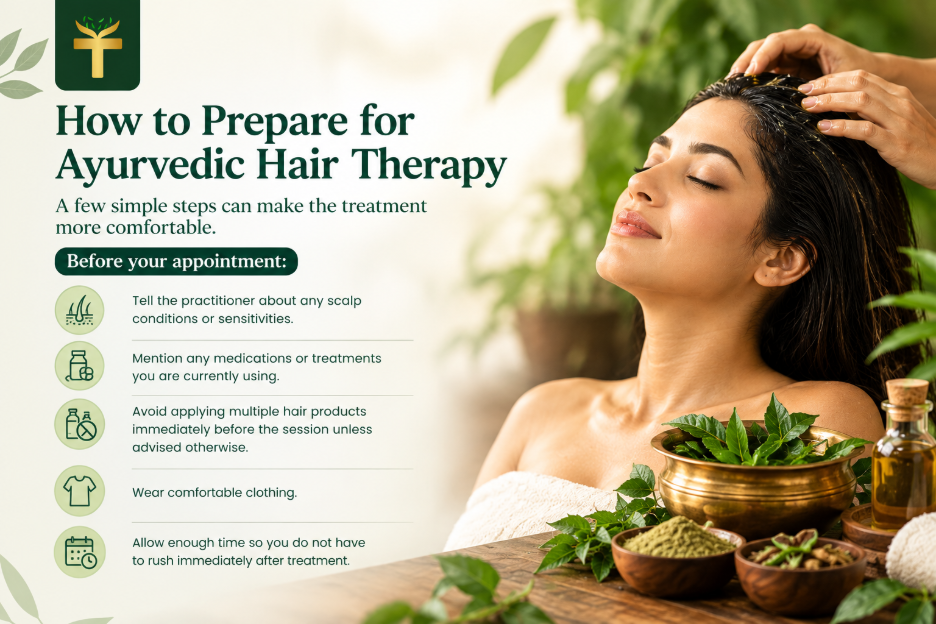
A few simple steps can make the treatment more comfortable.
Before your appointment:
- Tell the practitioner about any scalp conditions or sensitivities.
- Mention any medications or treatments you are currently using.
- Avoid applying multiple hair products immediately before the session unless advised otherwise.
- Wear comfortable clothing.
- Allow enough time so you do not have to rush immediately after treatment.
If you have recently undergone a chemical hair treatment, colouring, or other scalp procedure, inform the practitioner before your session.
What to Do After the Treatment
Aftercare depends on the treatment you receive.
Your practitioner may recommend:
- Keeping the oil on for a specific period
- Washing the hair with a suitable cleanser
- Avoiding excessive heat styling
- Avoiding harsh hair products temporarily
- Following a recommended hair-care routine
You should follow the specific instructions provided by your practitioner.
How Often Should Ayurvedic Hair Therapy Be Done?
There is no single schedule that works for everyone.
The recommended frequency may depend on:
- Your hair and scalp condition
- The type of treatment
- Your overall wellness goals
- The products being used
- Your practitioner’s assessment
Some people may include Ayurvedic scalp care occasionally, while others may follow a structured treatment plan.
Rather than assuming that more frequent treatments are always better, discuss an appropriate schedule with your practitioner.
Ayurvedic Hair Therapy vs. Regular Hair Spa
Although both may involve oil, massage, or hair-care products, Ayurvedic hair therapy and a conventional hair spa can have different approaches.
| Ayurvedic Hair Therapy | Regular Hair Spa |
| Based on traditional Ayurvedic principles | Generally focused on cosmetic hair care |
| May use Ayurvedic oils and herbal preparations | May use cosmetic creams, serums, or conditioners |
| Can include personalized wellness guidance | Usually follows a standard salon treatment |
| May consider lifestyle and individual factors | Primarily focuses on hair and scalp appearance |
| May form part of a broader Ayurvedic wellness plan | Usually provided as a standalone beauty treatment |
Neither approach is automatically suitable for everyone. Your choice depends on your personal preferences and hair-care goals.
When Should You See a Doctor for Hair Problems?
Ayurvedic hair therapy can be part of a wellness routine, but it should not replace professional medical evaluation when symptoms require it.
Consider consulting a dermatologist or other qualified healthcare professional if you experience:
- Sudden or severe hair loss
- Bald patches
- Persistent scalp itching
- Painful or inflamed scalp
- Sores or infections
- Sudden changes in hair texture or growth
- Hair loss accompanied by other unexplained symptoms
Finding the underlying cause is important before choosing any long-term treatment approach.
Choosing the Right Ayurvedic Hair Therapy
Before booking a treatment, consider the following:
1. Start With a Consultation
A consultation allows the practitioner to understand your concerns rather than recommending a generic treatment.
2. Ask What Products Will Be Used
Find out which oils or herbal preparations are being used and whether they are appropriate for you.
3. Understand the Treatment Process
Ask how long the treatment will take and what preparation or aftercare is required.
4. Discuss Your Hair and Scalp History
Mention allergies, sensitivities, previous chemical treatments, and any ongoing scalp concerns.
5. Follow a Consistent Routine
A single session may provide a pleasant experience, but long-term hair and scalp care also depends on everyday habits.
Final Thoughts
Ayurvedic Hair Therapy offers a traditional approach to hair and scalp wellness that combines herbal preparations, oil application, massage, and personalized care.
The focus is not simply on the appearance of the hair but also on creating a thoughtful scalp-care and wellness routine.
At Taamra Yug Ayurveda, individuals interested in Ayurvedic hair care can begin with a consultation to understand which treatment approach may be appropriate for their needs. A personalized assessment can help you choose a suitable therapy instead of following a one-size-fits-all routine.
Frequently Asked Questions
1. What is Ayurvedic Hair Therapy?
Ayurvedic Hair Therapy refers to traditional Ayurvedic approaches to hair and scalp care, which may include herbal oils, scalp massage, and personalized wellness recommendations.
2. Can Ayurvedic hair therapy help with hair fall?
Hair fall can have many different causes. Ayurvedic hair treatments may support general scalp and hair wellness, but persistent or significant hair loss should be evaluated by a qualified healthcare professional.
3. What oils are used in Ayurvedic hair treatments?
The oils used can vary depending on the treatment and individual requirements. An Ayurvedic practitioner can recommend an appropriate preparation after assessment.
4. How often should I have Ayurvedic hair therapy?
There is no universal schedule. Frequency depends on the treatment, scalp condition, and practitioner’s recommendations.
5. Is Ayurvedic hair therapy suitable for all hair types?
The treatment can be personalized, but individual suitability depends on the scalp, hair condition, sensitivities, and treatment being considered.
6. How long does an Ayurvedic hair therapy session take?
The duration varies depending on the treatment. Your practitioner can explain the expected session length before the appointment.
7. Can Ayurvedic hair therapy be combined with other Ayurvedic treatments?
It may be incorporated into a broader Ayurvedic wellness plan when appropriate. The combination should be determined by a qualified practitioner.
8. Should I consult a practitioner before Ayurvedic hair therapy?
Yes. A consultation can help determine which treatment and preparation are appropriate for your individual hair and scalp needs.