Ayurveda includes a wide range of therapies designed around an individual’s needs, lifestyle, and overall wellness. While treatments such as Abhyanga and Shirodhara focus on oil massage and relaxation, other Ayurvedic procedures have more specific traditional applications.
Nasya Therapy is one such treatment.
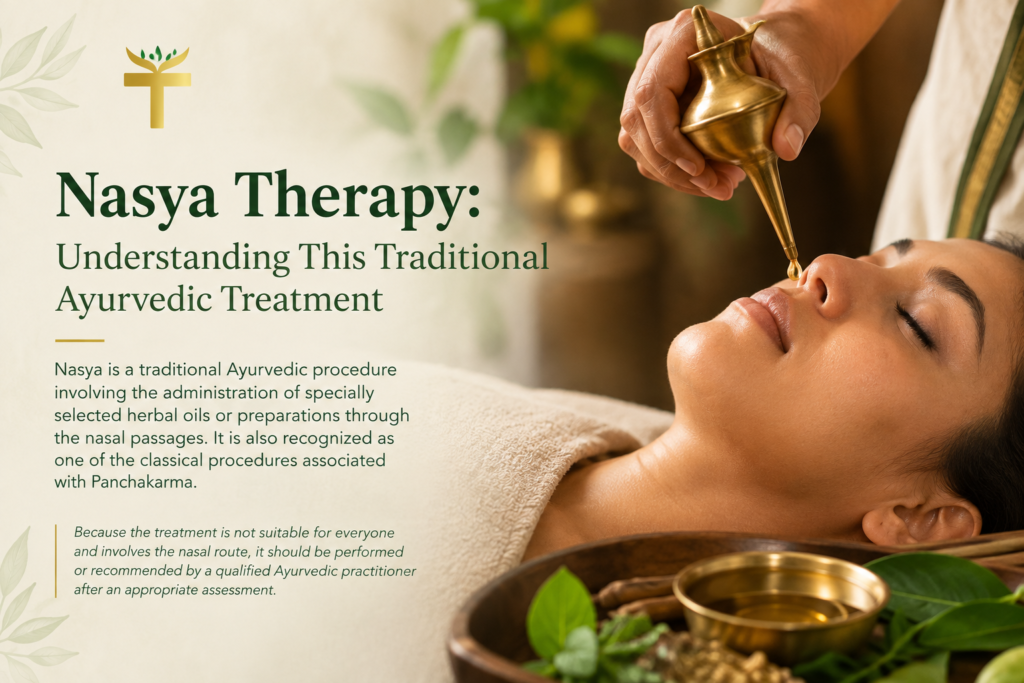
Nasya is a traditional Ayurvedic procedure involving the administration of specially selected herbal oils or preparations through the nasal passages. It is also recognized as one of the classical procedures associated with Panchakarma.
Because the treatment is not suitable for everyone and involves the nasal route, it should be performed or recommended by a qualified Ayurvedic practitioner after an appropriate assessment.
What Is Nasya Therapy?
Nasya Therapy is a traditional Ayurvedic treatment in which an Ayurvedic oil, herbal preparation, or other prescribed substance is administered through the nostrils.
In Ayurveda, the nasal passage is considered an important route for certain therapeutic preparations, particularly for concerns traditionally associated with the head and neck region.
The type of preparation, quantity, timing, and method can vary depending on the individual’s needs and the practitioner’s assessment.
Nasya should therefore not be treated as a standard procedure that is identical for every person.
Why Is Nasya Used in Ayurveda?
Within traditional Ayurvedic practice, Nasya is commonly associated with supporting the health and well-being of the head, neck, and sensory region.
Ayurvedic practitioners may consider Nasya as part of a personalized treatment plan for various traditional wellness objectives.
The recommendation depends on factors such as:
- Individual constitution
- Current concerns
- Age
- Lifestyle
- Seasonal factors
- Digestive and general health
- Previous Ayurvedic treatments
It is important to understand that traditional Ayurvedic descriptions do not necessarily correspond directly to modern medical diagnoses. Nasya should therefore be considered an Ayurvedic wellness therapy rather than a substitute for medical treatment.
How Does Nasya Therapy Work?
A typical Nasya session may involve several steps.
1. Initial Consultation
Before treatment, the practitioner evaluates whether Nasya is appropriate.
They may ask about your general health, lifestyle, current concerns, medications, allergies, and previous treatments.
This assessment is particularly important because nasal administration may not be appropriate under certain circumstances.
2. Preparation
The practitioner may prepare the face, neck, and surrounding area using gentle massage or warming techniques.
In some treatment plans, Abhyanga Therapy or another preparatory Ayurvedic procedure may be used before Nasya.
The exact preparation depends on the individual treatment plan.
3. Administration of the Ayurvedic Preparation
The selected oil or preparation is administered through the nostrils according to the practitioner’s protocol.
The quantity and type of preparation can vary.
You may be asked to position your head in a particular way during the procedure so that the treatment can be administered appropriately.
4. Rest After Administration
After the preparation has been administered, the practitioner may ask you to rest for a short period.
They may provide specific instructions about clearing the nasal passages or what activities to avoid immediately after treatment.
5. Aftercare
Aftercare depends on the type of Nasya performed and your individual circumstances.
Your practitioner may provide recommendations regarding food, rest, bathing, physical activity, or other Ayurvedic practices.
Potential Benefits of Nasya Therapy
Nasya is traditionally used for specific Ayurvedic wellness purposes. The experience and outcomes can vary from person to person.
Supports Traditional Head and Neck Wellness
Nasya is traditionally associated with the head, neck, and sensory region.
Ayurvedic practitioners may recommend it as part of a broader wellness program based on an individual’s assessment.
Provides a Focused Ayurvedic Treatment
Unlike a full-body treatment such as Abhyanga, Nasya focuses on a specific route of administration and is generally selected for particular therapeutic purposes.
Can Be Part of a Personalized Panchakarma Program
Nasya is traditionally recognized among the five Panchakarma procedures.
However, not everyone undergoing Panchakarma will necessarily receive Nasya. The treatment plan depends on the practitioner’s assessment.
Supports a Relaxing Treatment Routine
When performed in a calm professional environment, the preparation and treatment process can provide an opportunity to slow down and focus on personal wellness.
Nasya and Panchakarma: What’s the Connection?
Nasya is one of the five classical procedures associated with Panchakarma.
However, it is important to distinguish between the two.
| Panchakarma | Nasya |
| A broader Ayurvedic treatment system | A specific Ayurvedic procedure |
| May involve several therapeutic procedures | Involves administration through the nasal route |
| Treatment is personalized | Preparation and dosage are personalized |
| Can include preparation and aftercare | Also involves preparation and post-treatment guidance |
| May involve multiple therapies | Can be performed independently or within a larger program |
The fact that Nasya is associated with Panchakarma does not mean it should automatically be included in every Panchakarma program.
Who May Consider Nasya Therapy?
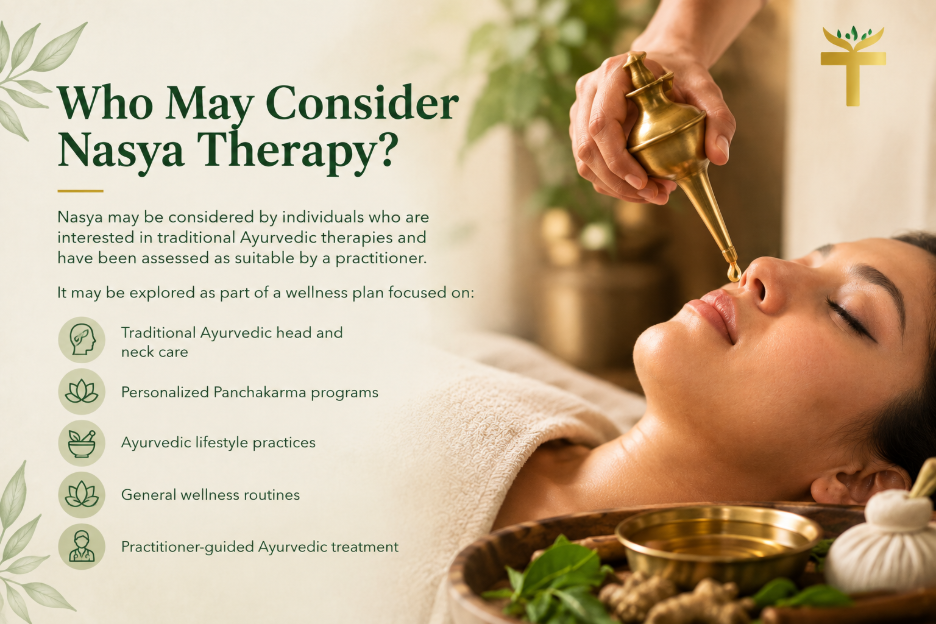
Nasya may be considered by individuals who are interested in traditional Ayurvedic therapies and have been assessed as suitable by a practitioner.
It may be explored as part of a wellness plan focused on:
- Traditional Ayurvedic head and neck care
- Personalized Panchakarma programs
- Ayurvedic lifestyle practices
- General wellness routines
- Practitioner-guided Ayurvedic treatment
However, individual suitability is important.
A consultation should take place before treatment, particularly if you have existing health concerns or take medication.
Who Should Avoid Nasya Without Professional Advice?
Nasya is not appropriate in every situation.
Professional assessment is especially important if you:
- Have an active nasal infection or significant congestion
- Have recently undergone nasal or facial surgery
- Have frequent nosebleeds
- Are pregnant
- Are very young or elderly
- Have a significant medical condition
- Take regular medications
- Have known allergies to ingredients used in Ayurvedic preparations
This list is not exhaustive. Your practitioner should determine whether the treatment is suitable for you.
If you have a medical condition or persistent nasal symptoms, seek advice from an appropriate healthcare professional rather than relying on Nasya as a replacement for medical care.
How to Prepare for Nasya Therapy
Your practitioner may provide specific preparation instructions before your appointment.
These can include:
- Eating according to the practitioner’s recommendations
- Avoiding a heavy meal immediately before treatment
- Informing the practitioner about medications and allergies
- Allowing enough time for the treatment and rest afterward
- Following any preparatory Ayurvedic recommendations
Do not use nasal oils or herbal preparations on your own simply because they are described online as Nasya.
The preparation and method should be appropriate for the individual.
What Should You Expect After Nasya?
After Nasya, some people may experience temporary sensations in the nose or throat as the preparation moves through the nasal passage.
Your practitioner will explain what is expected during and after treatment.
You may be advised to rest for a short period and follow specific dietary or lifestyle recommendations.
If you experience unusual, severe, or persistent symptoms after treatment, seek appropriate medical advice.
Can Nasya Be Combined With Other Ayurvedic Therapies?
Nasya may be incorporated into a broader Ayurvedic treatment plan when appropriate.
For example, a practitioner may recommend Abhyanga Therapy as part of preparation or combine Nasya with other treatments depending on the individual’s requirements.
It may also be considered alongside Shirodhara Therapy or other Ayurvedic therapies in a personalized wellness program.
However, combining multiple treatments should be based on professional assessment rather than simply choosing several therapies together.
Nasya vs. Shirodhara: What’s the Difference?
Both treatments are associated with Ayurvedic head-focused wellness, but they are performed very differently.
| Nasya Therapy | Shirodhara Therapy |
| Ayurvedic preparation is administered through the nostrils | A selected liquid is continuously poured over the forehead |
| Often associated with traditional head and neck care | Commonly used as a relaxation-focused Ayurvedic therapy |
| Requires careful assessment of nasal suitability | Focuses on a gentle external treatment experience |
| May be part of Panchakarma | May be included in broader Ayurvedic wellness programs |
| Preparation and dosage depend on the practitioner | The liquid used depends on the treatment plan |
The two therapies should not be considered interchangeable.
How Long Does a Nasya Session Take?
The duration can vary depending on the type of Nasya, preparation, and overall treatment plan.
The actual administration may be relatively brief, but the complete appointment can include consultation, preparation, treatment, and rest.
Your Ayurvedic practitioner can explain the expected duration before your appointment.
How Often Can Nasya Be Done?
There is no universal schedule that applies to everyone.
The frequency can depend on:
- The purpose of treatment
- The type of Nasya
- Individual constitution
- Age
- Seasonal considerations
- The practitioner’s assessment
Some forms of Nasya may be used in different contexts within Ayurveda, while therapeutic Nasya requires more individualized planning.
Always follow the schedule recommended by your practitioner.
Questions to Ask Before Booking Nasya Therapy
If you are considering Nasya, ask your Ayurvedic practitioner:
- Why is Nasya being recommended for me?
- Which preparation will be used?
- How should I prepare for the session?
- How long will the treatment take?
- What should I expect afterward?
- Are there any medications or health conditions that affect suitability?
- Can Nasya be combined with another Ayurvedic therapy?
- What aftercare will I need?
Getting clear answers can help you understand the treatment and make an informed decision.
Final Thoughts
Nasya Therapy is a traditional Ayurvedic procedure involving the administration of selected preparations through the nasal passages. It is associated with traditional approaches to head and neck wellness and is also recognized as one of the classical Panchakarma procedures.
Because Nasya involves a specific method of administration, professional assessment is important. The preparation, quantity, timing, and frequency should be selected according to individual circumstances.
At Taamra Yug Ayurveda, individuals interested in Nasya can discuss their requirements with an Ayurvedic practitioner before beginning treatment. A consultation can help determine whether Nasya is appropriate and whether it should be included as part of a broader Ayurvedic wellness plan.
Frequently Asked Questions
1. What is Nasya Therapy?
Nasya Therapy is a traditional Ayurvedic procedure in which selected herbal oils or preparations are administered through the nostrils under appropriate professional guidance.
2. Is Nasya part of Panchakarma?
Yes. Nasya is traditionally recognized as one of the five classical Panchakarma procedures.
3. What is used during Nasya?
The preparation varies depending on the individual’s needs and the practitioner’s assessment. Ayurvedic oils and herbal preparations may be used.
4. Is Nasya suitable for everyone?
No. Nasya may not be appropriate for certain individuals or circumstances. A practitioner should assess suitability before treatment.
5. Can Nasya and Shirodhara be done together?
They may be included in the same broader Ayurvedic treatment plan when appropriate, but the combination should be recommended by a qualified practitioner.
6. How long does Nasya Therapy take?
The treatment time varies depending on the procedure and preparation. The complete appointment may include consultation, preparation, administration, and rest.
7. Can I perform Nasya at home?
Some forms of Ayurvedic nasal oil practices may be recommended for self-care, but therapeutic Nasya should not be attempted without professional guidance.
8. How often should Nasya be done?
There is no standard frequency for everyone. The schedule depends on the type of treatment and individual assessment.
9. Should I consult an Ayurvedic practitioner before Nasya?
Yes. A consultation is recommended to determine whether Nasya is appropriate and which preparation and treatment approach should be used.