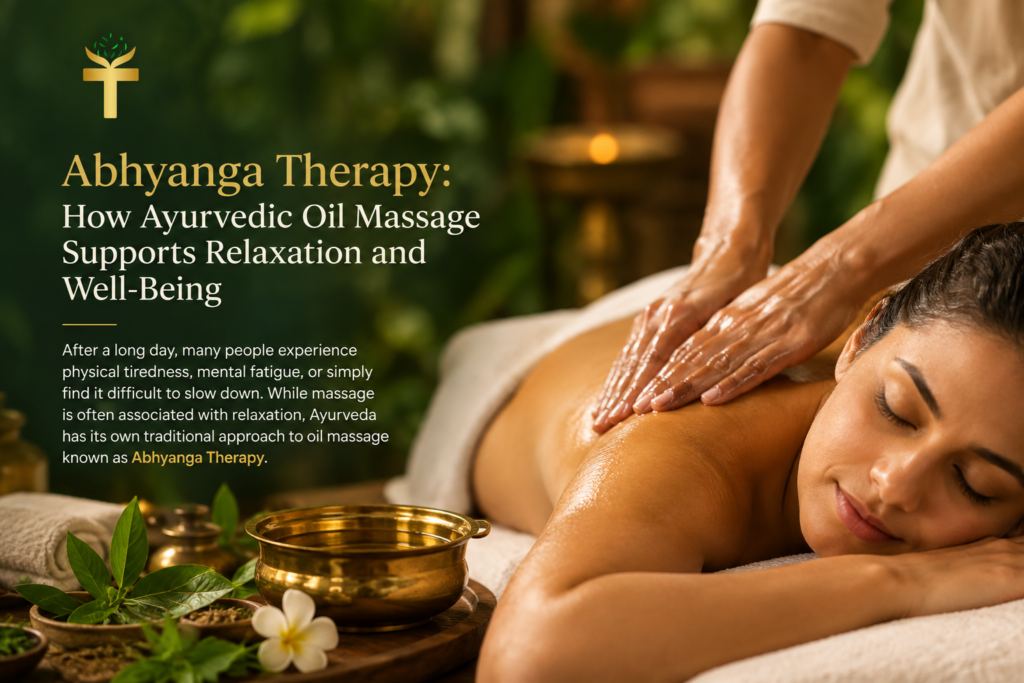
After a long day, many people experience physical tiredness, mental fatigue, or simply find it difficult to slow down. While massage is often associated with relaxation, Ayurveda has its own traditional approach to oil massage known as Abhyanga Therapy.
Abhyanga is a traditional Ayurvedic oil massage in which warm herbal oils are applied to the body using specific massage techniques. The oil and approach may be selected according to an individual’s constitution, lifestyle, and wellness goals.
Rather than being a one-size-fits-all massage, Abhyanga is generally viewed as part of a personalized Ayurvedic wellness routine.
What Is Abhyanga Therapy?
Abhyanga Therapy is a traditional Ayurvedic full-body oil massage. Warm oil is gently applied to the body using rhythmic movements and massage techniques.
Ayurvedic practitioners may select different oils depending on the person’s individual needs and the purpose of the session.
The treatment is traditionally associated with:
- Relaxation and calmness
- Supporting a sense of physical comfort
- Nourishing and moisturizing the skin
- Helping the body feel less tense
- Supporting a regular self-care routine
- Promoting an overall feeling of well-being
The experience can vary from person to person, which is why consultation with a trained Ayurvedic practitioner can help determine whether Abhyanga is appropriate.
How Does Abhyanga Therapy Work?
An Abhyanga session generally follows a structured process rather than simply applying oil and massaging the body.
1. Initial Consultation
The practitioner may first discuss your lifestyle, general wellness goals, daily routine, and any concerns you have.
This helps determine the appropriate approach, including the type of oil and treatment intensity.
2. Selection of Ayurvedic Oil
Ayurvedic oils are selected according to the practitioner’s assessment. Different herbal oils may be used depending on the individual’s requirements.
The oil is generally warmed to a comfortable temperature before application.
3. Full-Body Oil Application
Warm oil is applied to different areas of the body using gentle, rhythmic movements.
The practitioner may use different techniques and pressure levels depending on the treatment plan.
4. Massage and Relaxation
The massage is performed systematically across the body. The session provides an opportunity to slow down, relax, and disconnect from everyday demands.
5. Post-Treatment Care
After the massage, clients are generally given some time to rest. Depending on the practitioner’s recommendations, bathing after the treatment may also be suggested.
Your practitioner can provide specific aftercare instructions based on the treatment you receive.
What Are the Potential Benefits of Abhyanga Therapy?
Abhyanga is traditionally used as part of Ayurvedic wellness and self-care. People may choose it for different reasons, depending on their lifestyle and individual goals.
1. Encourages Deep Relaxation
The combination of warm oil, rhythmic massage movements, and a quiet environment can create a relaxing experience.
For people who regularly feel physically or mentally overwhelmed, incorporating relaxation-focused therapies into a wellness routine may be beneficial.
2. Supports Physical Comfort
Long working hours, repetitive activities, and daily routines can leave the body feeling tired or tense.
Abhyanga provides a gentle massage experience that may help people feel more comfortable and relaxed afterward.
3. Helps Nourish the Skin
Ayurvedic oils can provide moisture to the skin, which may leave it feeling softer and smoother after the treatment.
The specific oil used can vary according to the practitioner’s recommendations.
4. Supports a Calmer State of Mind
The treatment environment itself can encourage people to slow down. The gentle massage and time away from screens, work, and daily responsibilities may contribute to a greater sense of calm.
5. Complements an Ayurvedic Wellness Routine
Abhyanga can be used as a standalone wellness treatment or may be included as part of a broader Ayurvedic plan.
Depending on individual requirements, an Ayurvedic practitioner may recommend combining it with other therapies.
Who May Consider Abhyanga Therapy?
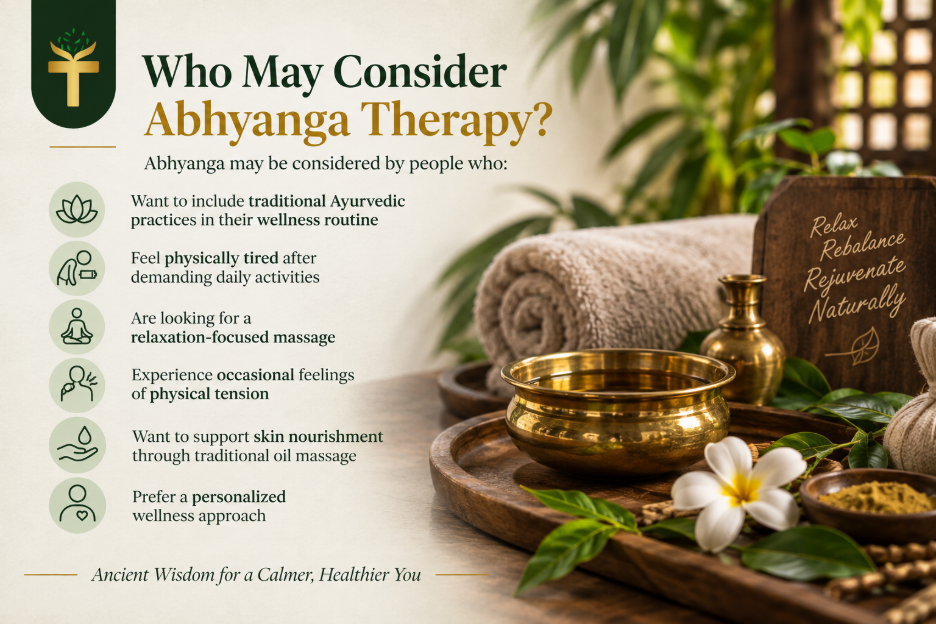
Abhyanga may be considered by people who:
- Want to include traditional Ayurvedic practices in their wellness routine
- Feel physically tired after demanding daily activities
- Are looking for a relaxation-focused massage
- Experience occasional feelings of physical tension
- Want to support skin nourishment through traditional oil massage
- Prefer a personalized wellness approach
However, it may not be suitable for everyone. People with specific health concerns, skin conditions, injuries, or other medical considerations should speak with a qualified practitioner before receiving treatment.
What Should You Expect During an Abhyanga Session?
If you have never experienced Ayurvedic oil massage before, knowing what to expect can make the experience more comfortable.
A typical session may include:
Consultation → Oil Selection → Warm Oil Application → Full-Body Massage → Rest → Aftercare
The duration can vary depending on the treatment plan and the wellness centre providing the therapy.
Your practitioner may also recommend dietary, lifestyle, or additional Ayurvedic practices depending on your individual needs.
Abhyanga vs. Regular Massage: Is There a Difference?
Although both involve massage, Abhyanga has a distinct Ayurvedic approach.
| Abhyanga Therapy | Regular Massage |
| Based on Ayurvedic principles | May follow different massage traditions |
| Uses Ayurvedic oils | May use massage oils, creams, or lotions |
| Oil may be selected according to individual needs | Product selection varies |
| Often incorporated into Ayurvedic wellness programs | Usually focused on massage and relaxation |
| Treatment approach may be personalized through Ayurvedic consultation | Approach depends on massage type and practitioner |
The right choice depends on your personal preferences, wellness goals, and the type of experience you are looking for.
How to Prepare for Abhyanga Therapy
A little preparation can make the session more comfortable.
Before your appointment:
- Wear comfortable clothing.
- Avoid arriving immediately after a heavy meal.
- Inform the practitioner about any relevant concerns.
- Allow yourself enough time so you do not have to rush after the session.
- Follow any preparation instructions provided by your Ayurvedic practitioner.
It is also useful to avoid scheduling demanding activities immediately after treatment if you want to enjoy a quiet period of relaxation.
What to Do After Abhyanga
After your session, your practitioner may recommend:
- Resting for a short period
- Following specific bathing instructions
- Drinking sufficient fluids
- Avoiding strenuous activities immediately afterward
- Following any personalized Ayurvedic recommendations
Aftercare can vary depending on the type of treatment and the individual’s needs.
Can Abhyanga Be Combined With Other Ayurvedic Therapies?
Yes, Abhyanga may be incorporated into a broader Ayurvedic wellness plan.
For example, practitioners may recommend it alongside therapies such as Shirodhara or other Ayurvedic procedures when appropriate.
The combination should be determined by a qualified practitioner rather than selected solely based on online information. A personalized approach helps ensure that the therapies are appropriate for the individual’s goals and circumstances.
Is Abhyanga Therapy Right for You?
There is no single Ayurvedic therapy that is suitable for everyone.
The best way to determine whether Abhyanga is appropriate is to discuss your goals and concerns with a qualified Ayurvedic practitioner. They can consider your individual requirements and recommend an appropriate treatment approach.
If you are primarily looking for relaxation, traditional oil massage, or an Ayurvedic addition to your wellness routine, Abhyanga may be worth discussing during a consultation.
Final Thoughts
Abhyanga Therapy is more than simply an oil massage. It is a traditional Ayurvedic practice that combines warm herbal oils, massage techniques, and a calm treatment environment to support relaxation and overall well-being.
Because Ayurvedic treatments can be personalized, the type of oil, treatment approach, and frequency may vary from person to person.
At Taamra Yug Ayurveda, Abhyanga and other Ayurvedic therapies can be approached as part of an individualized wellness plan. If you are considering Abhyanga Therapy and want to understand whether it is appropriate for you, consulting with an Ayurvedic practitioner can help you choose the right approach.
Frequently Asked Questions
1. What is Abhyanga Therapy?
Abhyanga Therapy is a traditional Ayurvedic full-body oil massage using warm herbal oils and specific massage techniques. It is commonly used as part of Ayurvedic relaxation and wellness practices.
2. How long does an Abhyanga session take?
The duration can vary depending on the treatment plan and the Ayurvedic centre. Your practitioner can explain the expected duration before the session.
3. What oil is used during Abhyanga?
The oil depends on the individual’s requirements and the practitioner’s assessment. Different Ayurvedic oils may be recommended for different purposes.
4. Is Abhyanga suitable for everyone?
Not necessarily. Certain health conditions, injuries, skin concerns, or other circumstances may require additional assessment. It is best to consult a qualified Ayurvedic practitioner before treatment.
5. Can Abhyanga help with stress and relaxation?
Abhyanga is traditionally used as a relaxation-focused Ayurvedic practice. The warm oil, rhythmic massage, and quiet treatment environment may help create a calming experience.
6. Can Abhyanga be combined with Shirodhara?
In some Ayurvedic wellness plans, Abhyanga and Shirodhara may be combined. However, the combination should be recommended by a qualified practitioner based on individual needs.
7. What should I do after Abhyanga?
Aftercare depends on the treatment and your practitioner’s recommendations. You may be advised to rest, follow specific bathing instructions, and avoid strenuous activities immediately after the session.
8. How often can I have Abhyanga Therapy?
There is no universal frequency that applies to everyone. A qualified Ayurvedic practitioner can recommend a suitable schedule based on your individual wellness goals and treatment plan.